
 100% Confidential


Inpatient Mental Health Facilities in Indiana: How to Choose the Right Level of Care
Clinically Reviewed by:

When someone you love is in a mental health crisis, everything can feel urgent and confusing.
You may be searching for inpatient mental health facilities in Indiana, a psychiatric hospital in Indiana, or even a psych ward in Indiana because you need help now — and you’re not sure what kind of care is actually right.
You don’t have to figure this out alone.
Indiana Center for Recovery helps people and families understand the right level of care, including inpatient psychiatric care, residential mental health treatment, detox support, and outpatient options. A confidential call can help you know what to do next.
Call for crisis support and treatment options. 100% confidential. No judgment. No commitment. If someone is in immediate physical danger, has attempted suicide, has a weapon, or cannot be transported safely, call 911 or go to the nearest emergency room.
Do I Need Inpatient Mental Health Care?
Inpatient mental health care is the highest level of treatment for a serious mental health crisis.
It may be needed when symptoms are too intense, unsafe, or overwhelming to manage at home. This can include moments when someone is unable to function, unable to care for themselves, or at risk of harming themselves.
Common reasons people need inpatient psychiatric care include:
- Suicidal thoughts or self-harm urges
- Psychosis, hallucinations, or delusions
- Severe depression that makes daily life feel impossible
- Mania, impulsive behavior, or several days without sleep
- Severe anxiety or panic that feels unmanageable
- Withdrawing from reality
- Not eating, sleeping, bathing, or caring for basic needs
- Mental health symptoms combined with drug or alcohol use
- Symptoms that have not improved with outpatient therapy or medication
You do not need to know the diagnosis before reaching out. You only need to know something is not okay — and that help is needed.
What Inpatient Mental Health Treatment Means
Inpatient mental health treatment gives someone a safe, medically supported place to stabilize.
The goal is not to keep someone in treatment forever. The goal is to get through the immediate crisis, understand what is happening, adjust medications if needed, and create a safer path forward.
Inpatient psychiatric care may include:
- Immediate psychiatric evaluation
- Medical screening
- 24/7 observation when needed
- Medication review and adjustment
- Support for distressing symptoms
- Safety planning
- Family communication, with permission
- Help transitioning into the next level of care
When safety is the priority, everything else can wait.
A calm, structured setting gives the person time to feel grounded again — while a psychiatric team works on what needs to happen next.
Types of Inpatient Mental Health Facilities in Indiana
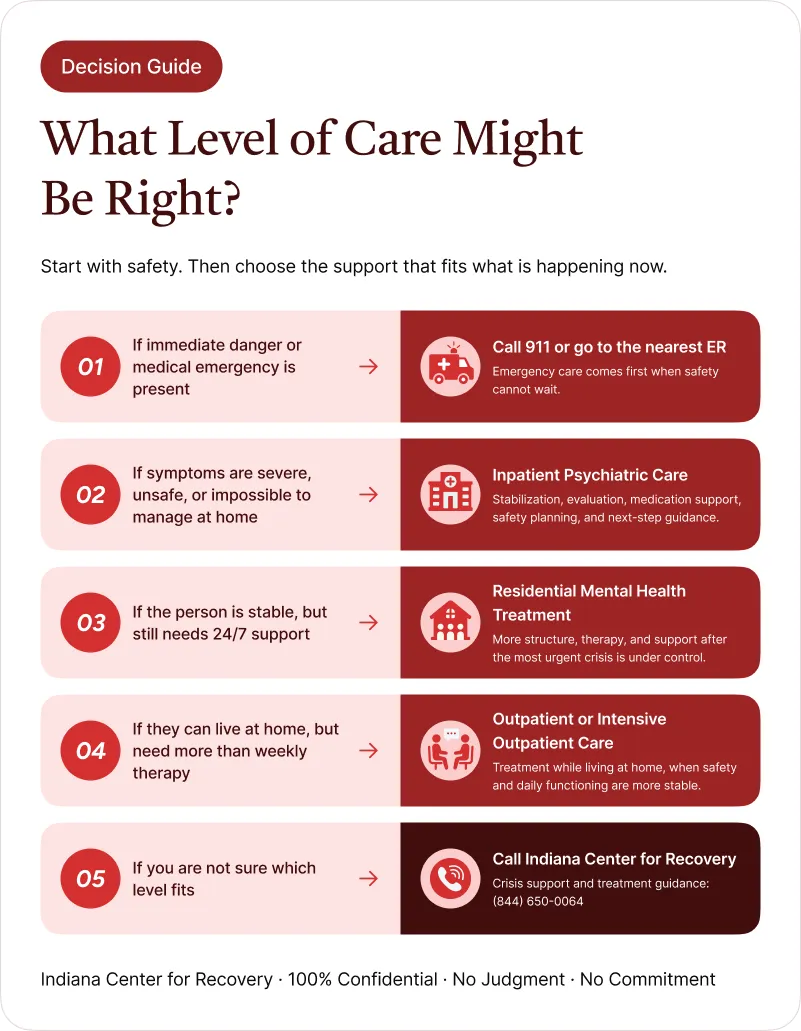
Not every mental health facility offers the same kind of care.
Some people need hospital-level psychiatric stabilization. Others need residential treatment, detox, outpatient therapy, or a combination of services.
The best inpatient mental health facility in Indiana depends on the person’s symptoms, safety needs, diagnosis, insurance, location, and whether they need psychiatric stabilization, medically supported detox, residential step-down care, or ongoing therapy.
Psychiatric Hospitals
A psychiatric hospital is for people who need a higher level of mental health care because of a serious crisis. This may be the right fit when someone is experiencing suicidal thoughts, psychosis, mania, severe depression, or unsafe behavior.
Psychiatric hospitals focus on stabilization first. Once the immediate danger passes, the person may transition into residential care, outpatient care, or another longer-term plan.
Inpatient Psychiatric Units
Some hospitals have psychiatric units for people who need short-term stabilization. These units may be helpful when someone first goes to the emergency room or needs hospital-based monitoring.
If someone is in immediate danger, call 911 or go to the nearest ER. You can still come to treatment after being discharged from an emergency room.
Crisis Stabilization Programs
Crisis stabilization programs are designed to help someone get through an urgent mental health situation. They may be helpful when the person needs immediate support but may not need a longer psychiatric hospital stay.
The right fit depends on safety, symptoms, medical needs, and whether the person can be safely supported outside of a hospital setting.
Residential Mental Health Treatment
Residential mental health treatment is usually the next step after the immediate crisis is under control. It still gives you 24/7 support, but the focus shifts from urgent stabilization to deeper healing. The schedule may include therapy, medication support, holistic care, groups, and time to rebuild stability.
For many people, inpatient psychiatric care helps them get safe. Residential treatment helps them keep getting better.
Dual Diagnosis Treatment
Mental health and substance use often happen together. If alcohol or drug use is involved, it is important to choose a facility that understands both. Detox needs, psychiatric symptoms, medications, and emotional safety all need to be handled carefully.
Indiana Center for Recovery offers onsite detox support when substance use is part of the crisis, along with psychiatric care, residential treatment options, and addiction treatment in Indiana.
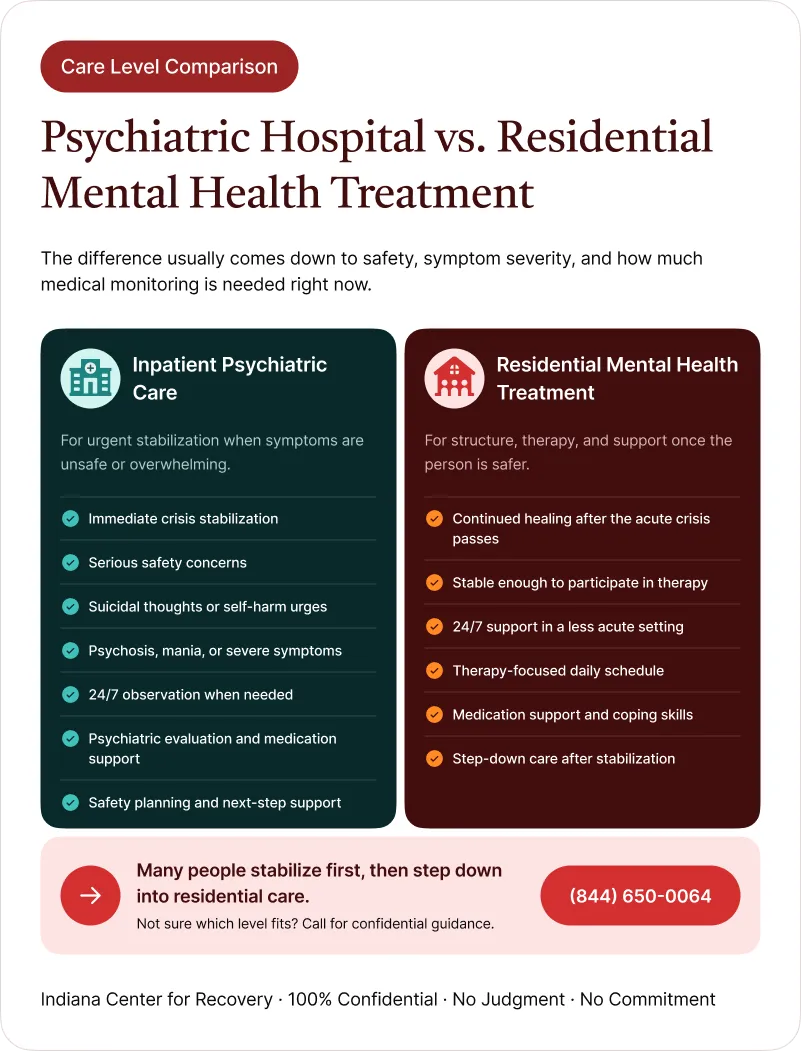
Psychiatric Hospital vs. Residential Mental Health Treatment
A lot of families are unsure whether they should look for a psychiatric hospital or residential mental health treatment. That confusion is normal. The difference usually comes down to how urgent and unsafe the symptoms are.
Psychiatric hospital care may be needed when:
- There is a serious safety concern
- Someone may hurt themselves
- Someone is losing touch with reality
- Symptoms are too intense to manage at home
- Medication needs to be monitored closely
- The person cannot function or care for themselves
Residential mental health treatment may be right when:
- The person is stable enough to participate in therapy
- They need a break from daily stress and triggers
- Outpatient therapy has not been enough
- They need 24/7 support, but not hospital-level observation
- They are ready to work on long-term healing
You do not have to decide this on your own.
When you call Indiana Center for Recovery, our team can listen to what is happening and help you understand whether inpatient psychiatric care, residential treatment, detox, outpatient care, or emergency care is the safest next step.
Not sure which level of care is right?
You do not have to figure it out alone. Indiana Center for Recovery can help you understand whether inpatient psychiatric care, residential mental health treatment, detox, or outpatient care is the safest next step.
How to Choose the Right Inpatient Mental Health Facility
When you are scared, it can be hard to know what questions to ask.
Start with this: Can this facility safely treat what is happening right now?
A good fit should be able to explain what level of care is appropriate, what happens when the person arrives, how safety is handled, and what the next step may look like after stabilization.
Before admission, ask:
- Do you treat suicidal thoughts, psychosis, mania, or severe depression?
- Is psychiatric support available?
- Can you help if substance use is involved?
- Do you offer detox if needed?
- How quickly can someone be admitted?
- Do you accept my insurance?
- Can you verify benefits confidentially?
- Will family be updated if the patient gives permission?
- What happens after inpatient care?
- Is residential treatment available as a step-down option?
You should not feel pressured, shamed, or rushed without clear answers.
The right team will meet you with compassion. They will understand that making this call can feel overwhelming.
What Happens When You Call
Calling does not mean you are committing to treatment.
It simply means you are getting answers.
When you call Indiana Center for Recovery, a helpline counselor can ask what has been going on, what symptoms are most concerning, whether there are immediate safety risks, and whether substance use or withdrawal may be involved.
From there, they can help explain your options.
That may include:
- Inpatient psychiatric care
- Residential mental health treatment
- Detox
- Outpatient treatment
- A higher emergency level of care
- Insurance verification
- Transportation support when available
Everything is confidential. No one will be notified because you reached out. There is no commitment to come in. You can simply ask questions and decide what feels right.
What to Do During a Mental Health Crisis
If someone is in immediate danger, call 911.
This includes situations where someone has attempted suicide, has a weapon, is threatening immediate harm, or cannot be safely transported.
If the situation is serious but not an active emergency, call Indiana Center for Recovery at (844) 650-0064. Our crisis support and admissions team can help you understand what level of care may be appropriate.
You can call if:
- You are worried about yourself
- You are worried about a loved one
- You do not know whether inpatient care is needed
- You need help understanding treatment options
- You are trying to avoid another crisis
- You need help now, but do not know where to start
You can also call or text 988 for immediate emotional crisis support.
For treatment guidance, admissions help, insurance verification, and next steps, call Indiana Center for Recovery.
How Indiana Center for Recovery Can Help
Indiana Center for Recovery offers advanced mental health and addiction treatment in Indiana, including psychiatric hospitalization, residential mental health treatment, detox, residential rehab, and outpatient therapies. The site describes ICFR as having multiple Indiana locations and treating mental health conditions, substance use disorders, trauma-related conditions, mood and anxiety issues, and co-occurring diagnoses.
Our psychiatric care is designed for people who need help getting through the most intense part of a mental health crisis.
Treatment may include:
- Psychiatric stabilization
- Medication management
- 24/7 support
- Safety planning
- Family support, with permission
- Detox support if substance use is involved
- Transition into residential care when appropriate
Most importantly, you are treated like a person — not a problem.
Many of our counselors and team members understand how hard it is to reach out. You can call with questions, fear, confusion, or uncertainty. You do not have to have the right words.
Insurance May Cover Treatment
Treatment may cost less than you think.
Many people use insurance to cover inpatient psychiatric care, residential mental health treatment, detox, or other treatment options. Indiana Center for Recovery’s site says treatment is usually in-network and that coverage can sometimes make out-of-pocket costs very low or even zero depending on the person’s plan and healthcare expenses.
You can verify your insurance privately before making any decision.
No commitment. No pressure. No one will be notified.
Frequently Asked Questions (FAQ)
What is the best inpatient mental health facility in Indiana?
The best inpatient mental health facility depends on the person’s symptoms, safety needs, diagnosis, insurance, location, and whether they need psychiatric stabilization, detox support, residential step-down care, or outpatient treatment.
The right facility should be able to safely treat what is happening now and help plan what comes next.
What qualifies someone for inpatient psychiatric care?
Someone may need inpatient psychiatric care when symptoms are unsafe, severe, or impossible to manage at home.
This may include suicidal thoughts, self-harm urges, psychosis, mania, severe depression, inability to function, or being unable to care for basic needs.
A clinical assessment can help determine the safest level of care.
Is inpatient mental health treatment the same as a psych ward?
“Psych ward” is an informal term people often use when looking for inpatient psychiatric care.
The more accurate terms are inpatient psychiatric care, psychiatric hospital, or inpatient mental health facility. The goal is safety, stabilization, and treatment — not punishment or isolation.
Do I need to go to the ER before admission?
Not always.
Some people come to treatment after an ER visit. Others call a psychiatric facility directly. If someone is in immediate danger, has attempted suicide, has a weapon, or cannot be transported safely, call 911 or go to the nearest emergency room.
How do I get admitted to a psychiatric hospital in Indiana?
The process usually starts with a confidential call or assessment.
You may be asked about symptoms, safety concerns, medications, medical history, substance use, insurance, and whether the person is willing to come in voluntarily.
From there, the team can help determine the safest next step.
How long does inpatient psychiatric care last?
The length of stay depends on the person’s symptoms, safety, diagnosis, medication needs, and discharge plan.
Some people only need short-term stabilization before stepping down into residential care or another level of treatment.
What if substance use is involved too?
If alcohol or drug use is involved, choose a facility that can treat both mental health and substance use concerns.
Indiana Center for Recovery offers detox support when substance use is involved, along with psychiatric and residential treatment options.
Can family members call for someone else?
Yes.
Family members often call because they are worried about a spouse, adult child, parent, sibling, or friend. Privacy laws may limit what a facility can share without permission, but you can still call, explain what is happening, and ask what options may be available.
What happens after inpatient psychiatric care?
After inpatient psychiatric care, the next step may be residential mental health treatment, outpatient treatment, medication management, therapy, or another support plan.
The goal is not just to get through the crisis. The goal is to keep building stability after the crisis passes.
Indiana Center for Recovery Locations




 100% Confidential
 Available Now
 Verify Your Insurance

 Call (844) 650-0064
