




Clinically Reviewed by:

Check In and Reach Out is a seasonal mental health initiative designed to help people notice when someone is struggling and feel more comfortable asking for support themselves. The end of the year can increase stress, amplify loneliness, and worsen conditions like seasonal affective disorder (SAD), a type of depression linked to decreased sunlight that affects mood, sleep, and energy
Talking about how you feel is always allowed. If your mood drops, if you feel tense more often, or if daily responsibilities feel heavier than usual, help is available. Reaching out early can prevent symptoms from becoming overwhelming.
Checking in on others’ matters, too. Many people hide their stress or sadness during the holidays. A simple conversation can help someone who feels isolated, anxious, or depressed. If finding the right words feels difficult, Indiana Center for Recovery offers a conversation guide with practical examples and supportive phrases to make starting the dialogue easier.
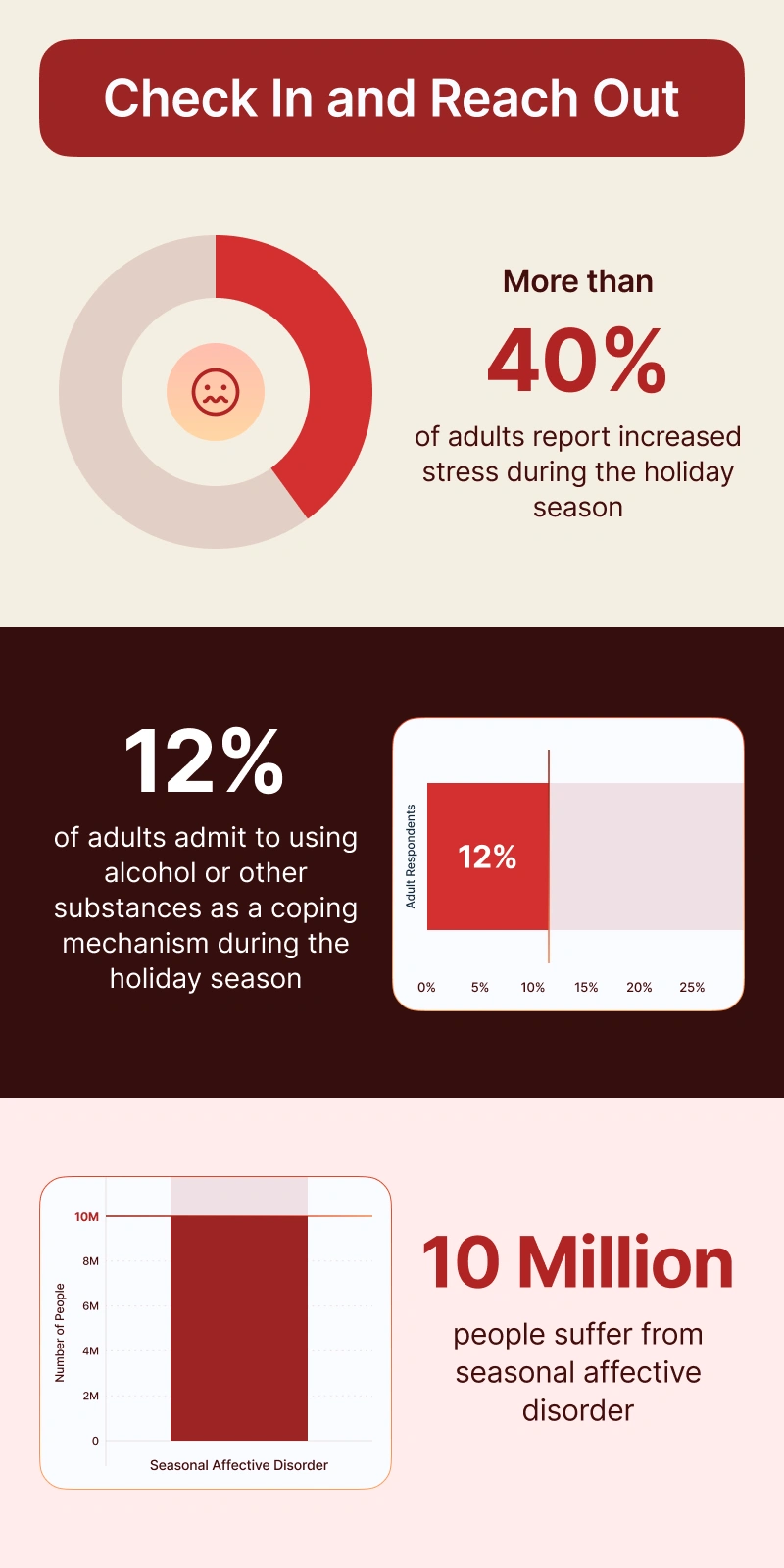
You might notice shifts in mood, energy, or behavior. These can signal that someone needs extra support, especially during the holidays. Examples include:
These symptoms can point to depression, anxiety disorders, or stress-related changes in the brain and body. You do not have to diagnose anything. Just noticing the change is enough to start a caring conversation.
Your feelings matter, too. The holidays can increase pressure, sensory overload, financial worry, or family conflict. These steps can help you keep your emotional balance:
These strategies support mental stability and reduce the risk of worsening depression or anxiety symptoms.
Reaching out, either for yourself or for someone else, can prevent a crisis and create a genuine connection. Here are practical ways to begin:
If symptoms interfere with daily responsibilities, relationships, or your ability to function, contacting a mental health professional is the safest next step. Help is available, and the first step is simply reaching out.
Spread awareness, support others, and encourage open dialogue by engaging with Check In and Reach Out on Facebook, Instagram, and LinkedIn. Your voice may help someone feel safe enough to ask for help.
You’re reading this for a reason. Even if you don’t know if you’re “ready”, now is the best time to reach out.
 100% Confidential
No judgement
No commitment
 Call (844) 650-0064
  Verify Your Insurance

Error: Contact form not found.
 Get Answers Now
You don’t have to figure this out alone. We can guide you through your options—completely confidential and with zero commitment.
100% Private


