
 100% Confidential



Does EMDR Therapy Actually Work?
Clinically Reviewed by:

People usually don’t search this because they’re curious.
They search it because they’re unsure.
Maybe you’ve tried therapy before and it didn’t stick.
Maybe you’ve learned how to talk about what happened, but your body still reacts like it’s happening now.
Or maybe EMDR just sounds… strange.
Eye movements? Following a light? It’s fair to question it.
Before you commit to something like this, you want a real answer:
Does EMDR therapy actually work, or is it just another trend?
Does EMDR Therapy Really Work?
Short answer: yes, for many people, it does.
But not in a vague, “you might feel a little better” kind of way.
EMDR is one of the most researched trauma therapies available today. It’s recommended by organizations like:
- The American Psychological Association (APA)
- The World Health Organization (WHO)
- The Department of Veterans Affairs
It’s used because people often see real changes in how they react to memories, triggers, and stress.
That said, it’s not magic. And it’s not the right fit for every situation.
What matters more is why it works when it does.
How EMDR Therapy Works
EMDR therapy doesn’t work by making you “forget” what happened.
It works by helping your brain process a memory that got stuck.
Normally, when something stressful happens, your brain processes it and stores it in a way that feels manageable over time.
But with trauma, that process can get interrupted.
So instead of becoming a past event, the memory stays active. It shows up as:
- Sudden anxiety
- Intrusive thoughts
- Emotional reactions that feel out of proportion
- physical tension or panic
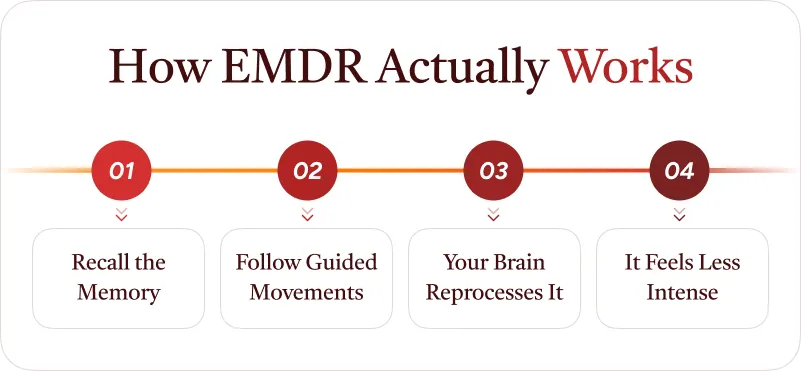
EMDR helps your brain finish that processing.
During a session, you briefly focus on the memory while also following a back-and-forth stimulus (like eye movements or tapping).
This does something important:
It allows the brain to reprocess the memory without the same emotional intensity.
Over time, the memory doesn’t disappear, but it starts to feel:
- Less overwhelming
- Less reactive
- More like something that happened, not something you’re still in
What Does “Working” Actually Look Like?
This is where people get confused. “Working” doesn’t mean you forget everything. It doesn’t mean you suddenly feel happy all the time.
It usually looks more like this:
- You can think about what happened without your body reacting immediately
- Triggers don’t hit as hard or as fast
- You feel more in control of your responses
- The memory feels more distant, not constantly present
To put it even more simply, the trauma doesn’t affect you like it used to. For some people, this shift happens faster than expected. For others, it builds gradually over multiple sessions, typically within 6-12 sessions.
When EMDR Is Most Effective
EMDR tends to work best when symptoms are connected to specific experiences or patterns, such as:
- Trauma (single event or ongoing)
- PTSD
- Anxiety tied to past events
- Panic responses that feel automatic
- Certain phobias
- Distressing memories that keep resurfacing
It can still help in more complex situations, but the approach may take longer and require more preparation.
When EMDR Might Not Work (Or Needs a Different Approach)
EMDR is not always the first step.
It may not be the right place to start if:
- You are in an active crisis
- Your environment still feels unstable or unsafe
- Substance use is ongoing
- Even talking about the past feels overwhelming
In those situations, treatment usually starts with:
- Building stability
- Learning ways to manage stress and emotional reactions
- Creating a sense of safety first
Once that foundation is in place, EMDR can be introduced so you can work through those memories without shutting down, panicking, or feeling out of control during sessions.
Why EMDR Can Work When Talk Therapy Hasn’t
A lot of people land here after trying traditional therapy.
They’ve talked through everything. They understand their patterns. But that memory is still so painful.
That’s because insight and emotional response are not the same thing.
You can know something logically and still feel it physically.
EMDR targets the part of the brain where those emotional responses are stored.
So instead of just understanding the problem, you start to feel a shift in how your body reacts to it.
Does EMDR Work Faster Than Other Therapies?
It can, but not for the reason most people expect.
EMDR is not focused on getting through therapy as quickly as possible. It focuses on changing how your brain responds to something that still feels active.
Because of that, some people notice a shift sooner than they did with traditional talk therapy.
Instead of spending sessions explaining or analyzing what happened, EMDR targets how the memory is stored and how your body reacts to it now.
For some people, that leads to:
- Less intense emotional reactions
- Fewer triggers throughout the day
- A sense that the memory feels more distant
That shift is what people are usually looking for, not just finishing therapy faster.
At the same time, not everyone experiences it the same way. If what you are dealing with is more complex or ongoing, the process may take more time and support.
What matters more than speed is whether the approach is actually addressing what has been keeping you stuck.
Is EMDR Overhyped?
It can sound that way at first.
Anything that claims to reduce trauma responses in fewer sessions than traditional therapy is going to raise questions.
But EMDR isn’t new, and it isn’t experimental.
What gets exaggerated sometimes is:
- How fast it works for everyone
- How simple the process is
- The idea that it’s a one-size-fits-all solution
The reality is more balanced:
It’s a structured, evidence-based therapy that works well for many people—especially when it’s used at the right time, with the right support.
The Real Question: Is EMDR Right for You?
This matters more than whether it “works” in general.
The better question is:
- Are your symptoms tied to past experiences that still feel active?
- Do you feel like you’ve talked through things but haven’t actually felt relief?
- Do your reactions feel automatic, even when you understand them?
If so, EMDR may be worth exploring.
Find Out If EMDR Is the Right Next Step for You
You don’t have to keep dealing with the same reactions every day. Talking with someone who understands how EMDR works can help you figure out if this is the right next step and what treatment could look like for you.
At Indiana Center for Recovery, EMDR is part of a structured treatment program. You are not limited to one approach. With multiple therapy options available in one place, your care can be adjusted based on what actually helps.
Indiana Center for Recovery Locations

 100% Confidential
 Call
Call  Available Now
 Verify Your Insurance


 Call (844) 650-0064
