
 100% Confidential



How Long Does EMDR Therapy Take? Sessions, Timeline, and When It Starts Working
Clinically Reviewed by:

EMDR therapy often takes about 6 to 12 sessions, with each session lasting 60 to 90 minutes. Sessions are usually once a week, so most people move through the process over several weeks to a few months. Some people start to feel a shift early on, while others need more time.
How long it takes really comes down to your situation. A single event is usually faster to work through. More complex or long-term experiences can take longer, and the pace depends on what you’ve been through.
How Long Does EMDR Therapy Take Overall?
How long EMDR takes depends on what you’ve been through.
If you’re working through a single-event trauma, like an accident or a specific loss, it often falls within that 6 to 12 session range. For more complex trauma or PTSD, especially when there have been repeated or long-term experiences, it can take longer and may extend over a few months.ⓘ
EMDR is focused. Instead of talking through the same experience over and over, each session targets a specific memory. That’s why the overall timeline is often shorter than traditional talk therapy.
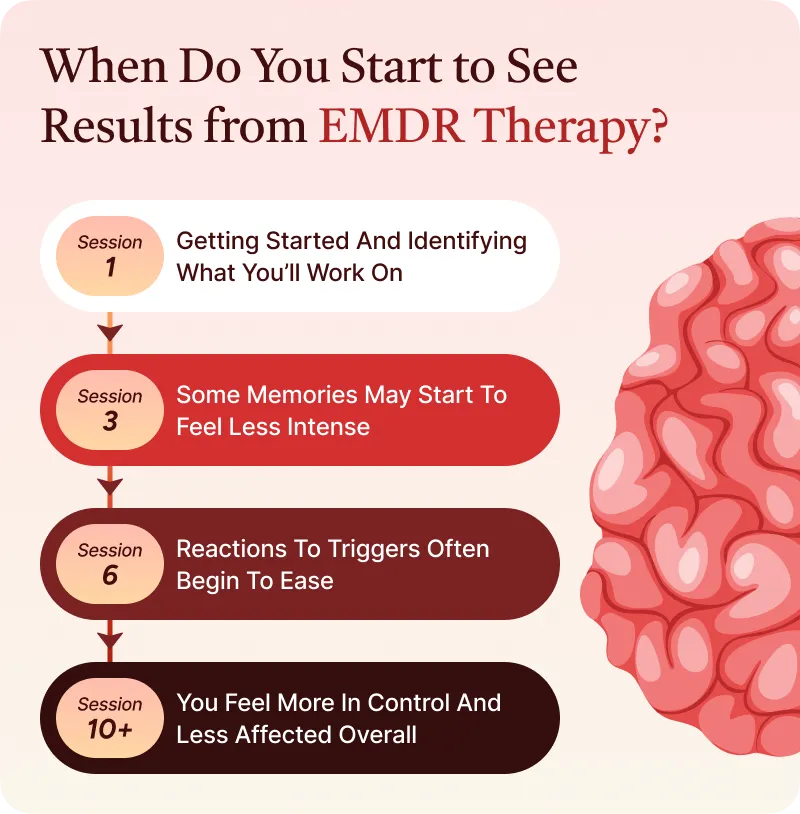
How Long Does It Take for EMDR to Start Working?
Some people begin to notice changes within the first few sessions, especially as certain memories start to feel less intense.
Early signs that EMDR is working may include:
- Memories feeling less overwhelming
- Reduced emotional reactions
- Fewer or less intense triggers
If you have more complex or long-term trauma, it may take longer to see consistent improvement. In these cases, progress tends to happen more gradually as multiple experiences are processed.ⓘ
What Happens in the First Few EMDR Sessions?
EMDR doesn’t start with jumping straight into difficult memories.
The first few sessions are about understanding what you’ve been dealing with and making sure you have the tools to handle the process.
This usually includes:
- Identifying the experiences you want to work on
- Understanding how they’re affecting you now
- Learning grounding and coping strategies
Once that foundation is in place, the sessions become more focused on processing those memories so they don’t affect you in the same way.
Why EMDR Therapy Timelines Can Vary
Even though many people fall into a similar range, the timeline can look different depending on a few things.
Type of trauma
A single event is usually quicker than repeated or long-term experiences
Number of memories being worked through
Some people are focusing on one experience, while others have several
Current symptoms
Things like anxiety, depression, or substance use can affect how quickly things move
How ready you feel going into it
Some people need more time at the beginning to build coping skills before getting into deeper work
How Long Does an EMDR Session Last?
Most EMDR sessions last between 60 and 90 minutes.
They are longer than standard therapy sessions because time is needed to fully work through a memory and return to a more settled state before the session ends.
Ending a session mid-process can leave you feeling vulnerable or still activated from working through a traumatic memory. EMDR is not always emotionally comfortable, but it allows you to revisit a memory while recognizing that you are no longer in danger. Over time, this helps the memory feel less intense and reduces the likelihood of a strong emotional reaction.
Is EMDR Therapy Faster Than Traditional Talk Therapy?
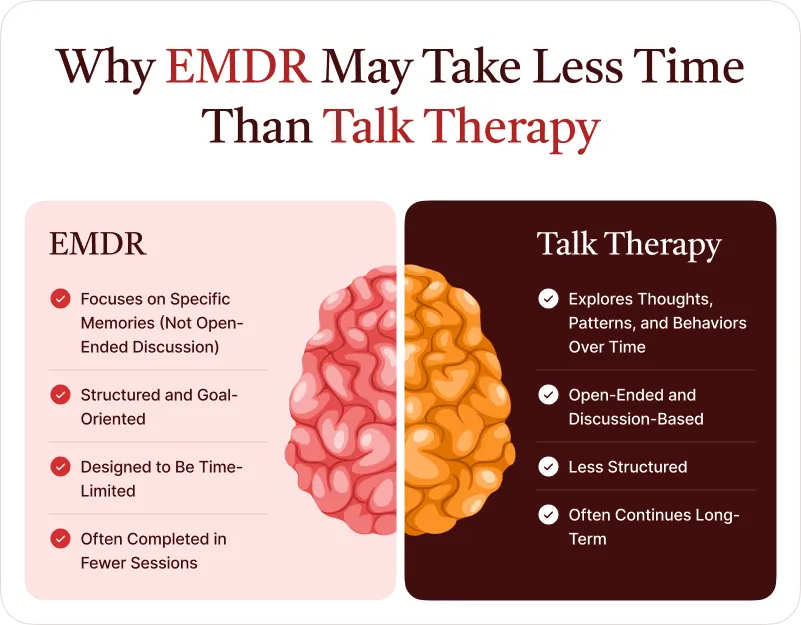
In many cases, yes.
EMDR is more structured and focused on specific experiences you’ve been through, which is why it’s often completed in fewer sessions. Traditional talk therapy tends to be more open-ended and can continue for months or even years.
That doesn’t mean one is better than the other. They just work differently.
EMDR is designed to help your brain process specific memories so they don’t affect you as strongly. Because of that focus, many people start to see changes in a shorter amount of time.
How to Tell If EMDR Is Working
EMDR is working when the way you respond to a memory begins to change.
The memory does not go away, but you may be able to think about it without the same emotional or physical response.
Signs that EMDR is working can include:
- You can think about the memory without the same level of distress
- Physical reactions like anxiety or tension begin to ease
- Triggers do not feel as immediate or overwhelming
- You feel more in control of how you respond
These changes may happen gradually, especially when multiple experiences are being processed. The goal is not to erase what happened, but to reduce how strongly it affects you.
What to Do Next
If you’re considering EMDR therapy, understanding the timeline is just one part of the decision. What matters most is whether the approach fits what you’ve been dealing with and how your symptoms are affecting you day to day.
A structured mental health treatment program can help you work through underlying trauma in a focused, time-limited way, rather than continuing in open-ended therapy. If you’re dealing with both mental health symptoms and substance use, a dual diagnosis treatment program may also be part of the right approach.
Frequently Asked Questions (FAQ)
How many EMDR sessions do I need?
Most people need between 6 and 12 EMDR sessions, but the exact number depends on what you are working through. A single event can often be processed more quickly, while multiple or long-term experiences may take more time.
Can EMDR work in just a few sessions?
In some cases, yes. If the focus is on a single memory or event, noticeable relief can happen within a few sessions. More complex situations usually take longer because there are multiple experiences to process.
Do I have to go to EMDR therapy every week?
EMDR is typically done once a week, but the schedule can vary. Some people attend more frequently, while others space sessions out depending on their needs and how they are responding.
What if I have multiple traumatic experiences?
EMDR can still be effective, but the process may take longer. Each memory is usually worked through individually, so treatment is adjusted based on how many experiences are being targeted.
How do I know how long EMDR will take for me?
That is usually determined early in the process. After an initial assessment, a therapist can give you a general idea of how many sessions may be needed and adjust the plan as you move forward.
What Does EMDR Therapy Help With?
EMDR therapy is most effective for conditions connected to past experiences that still feel emotionally intense or unresolved.
It is commonly used for:
- Post-traumatic stress disorder (PTSD)
- Trauma from accidents, abuse, or loss
- Anxiety and panic attacks
- Depression connected to past experiences
- Phobias or specific fears
- Stress related to medical events or major life changes
EMDR can also help when symptoms do not seem tied to one clear event. In these cases, treatment focuses on identifying and processing the experiences that may be contributing to how you feel now.
Indiana Center for Recovery Locations

 100% Confidential
 Call
Call  Available Now
 Verify Your Insurance


 Call (844) 650-0064
