
Clinically Reviewed by:

Anxiety is one of the most common reasons people seek brain mapping because it can be hard to explain and even harder to treat.
Brain mapping shows what’s actually going on in the brain in real-time, helping to answer:
Anxiety can feel similar on the surface, but the underlying brain activity can be very different from person to person. This is one of the main reasons treatment doesn’t always work the same way.
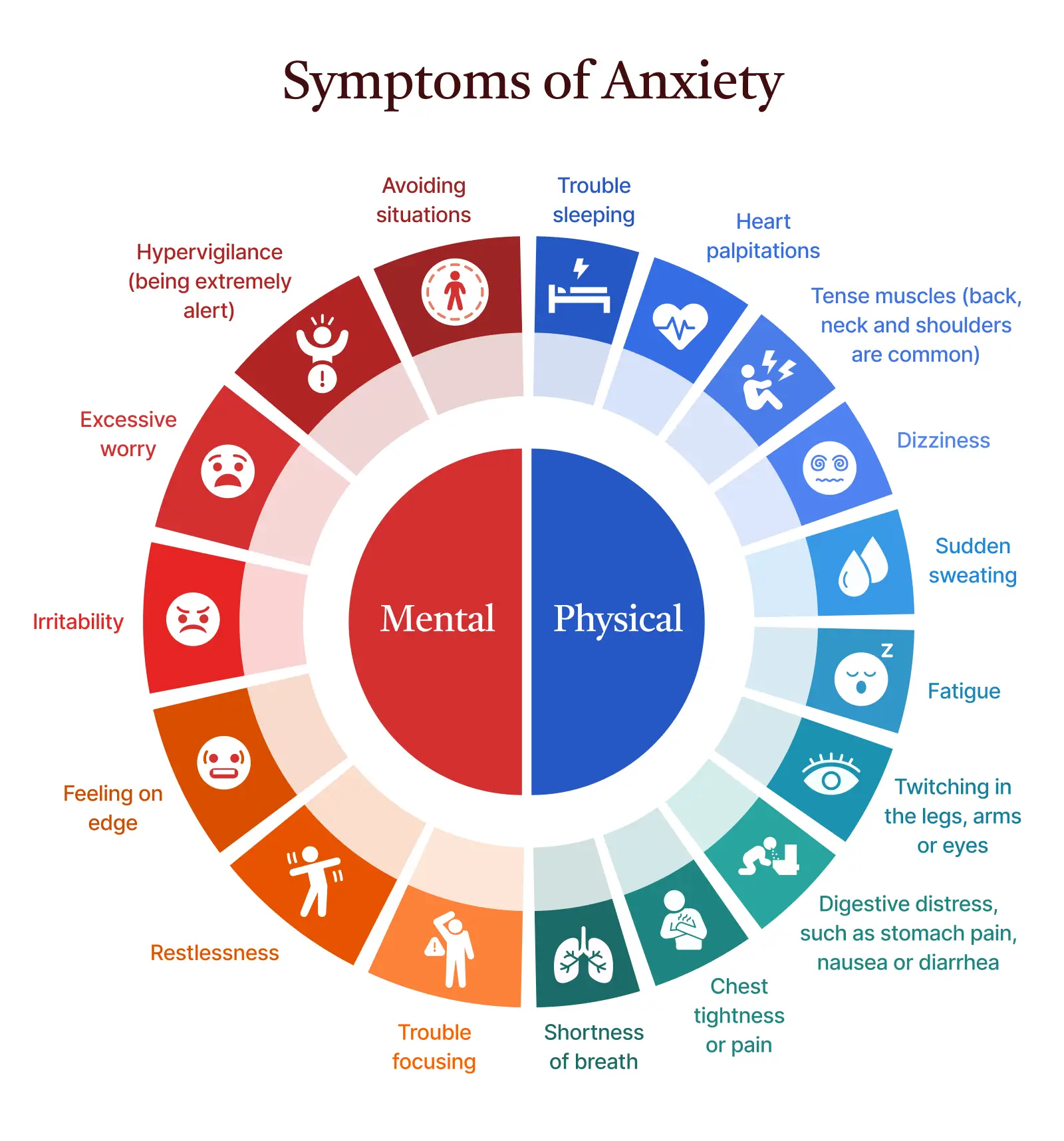
Two people may both feel:
But their brain patterns may be completely different, which changes what kind of treatment will actually help.
Symptoms alone do not always show why anxiety is happening.
Brain mapping helps identify which pattern is present so treatment can be more focused and intentional. Instead of guessing, it shows how your brain is actually functioning in real time.
This added clarity helps focus on the specific brain regions linked to your symptoms, guide treatment choices that are more likely to be effective, reduce time spent on trial-and-error approaches, and build a plan that is tailored to how your brain is functioning. ⓘ
Specifically, brain mapping helps answer:
This brain-based data can help explain why:
Examples:
Brain mapping is especially important because anxiety is not one single condition. Different brain patterns lead to similar symptoms, but require very different treatment approaches.
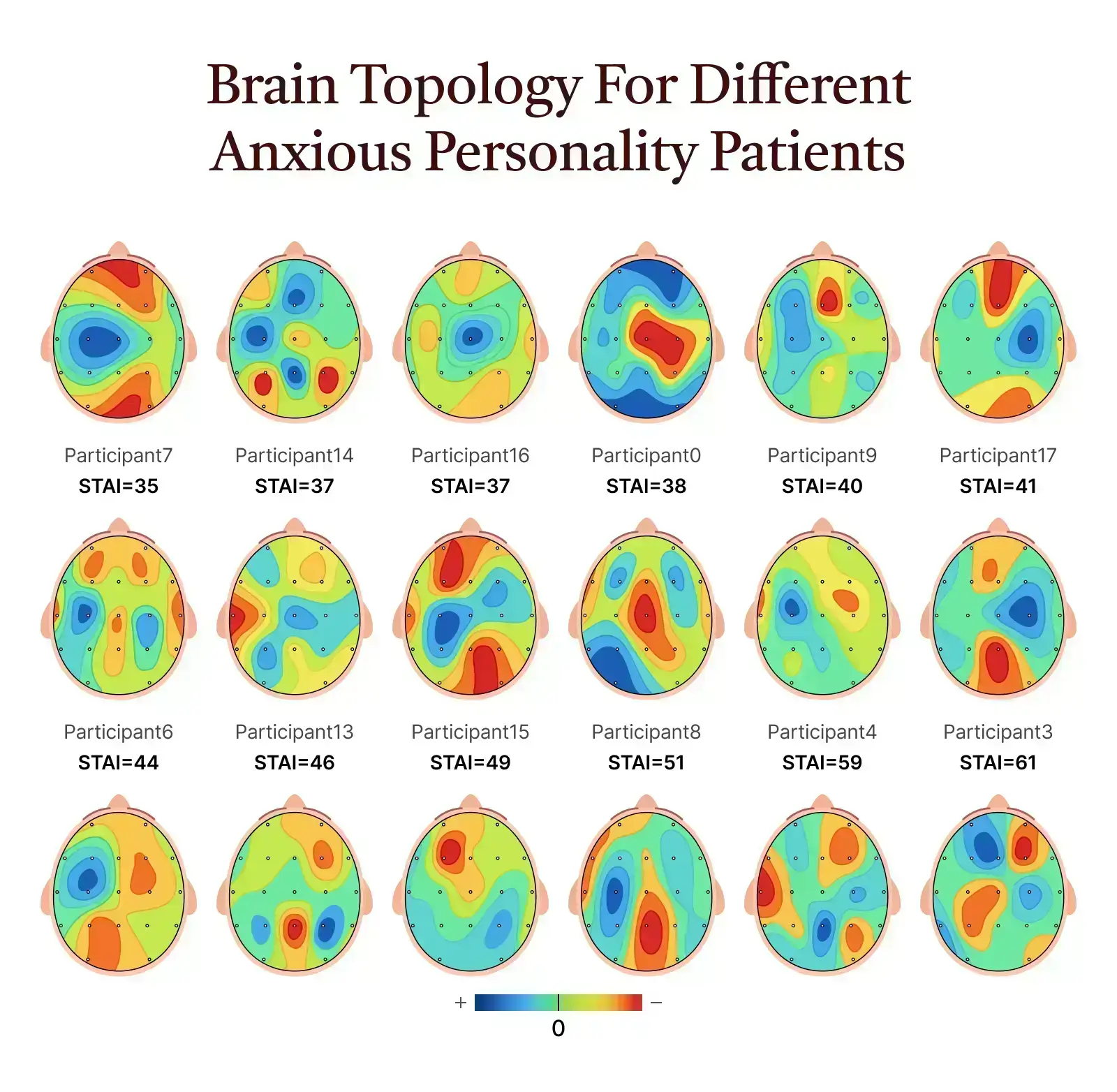
Brain mapping does not reduce anxiety to one single pattern. It looks for the combination of findings that best matches the way symptoms show up.
These patterns are based on measurable brainwave activity and communication between brain regions observed in qEEG studies of anxiety. The variation and combination of issues help explain why symptoms can feel so different from person to person.
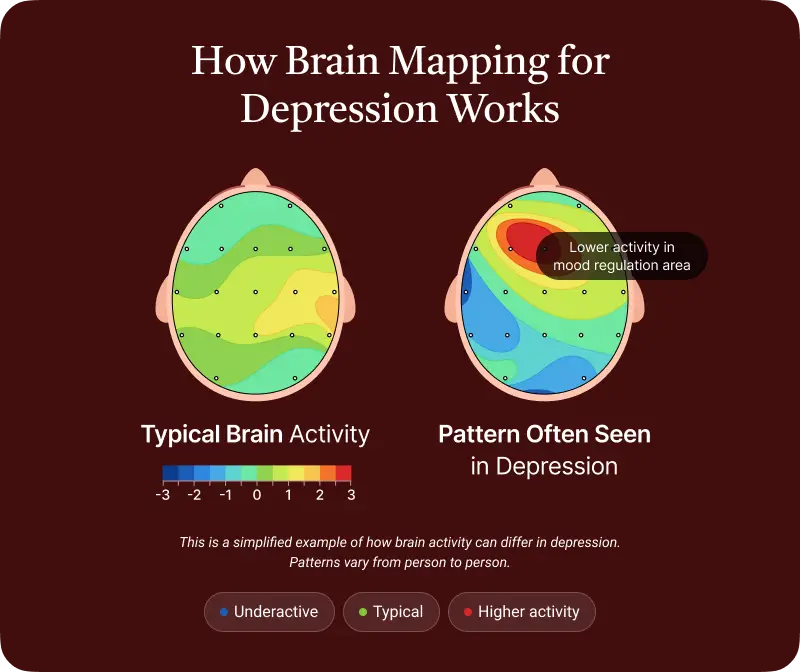
Brain mapping results are typically displayed as a visual map of brain activity, showing how different areas of the brain are functioning compared to expected patterns.
For anxiety, results may highlight:
These findings support the idea that anxiety is not just a feeling, but a pattern of brain function that can be identified and better understood.
Fast beta activity is often associated with hyperarousal, excessive vigilance, and a brain that has trouble slowing down.
Elevated beta activity has been consistently observed in anxiety-related research and is associated with hyperarousal, increased vigilance, and a brain that has difficulty slowing down. ⓘ
What this feels like:
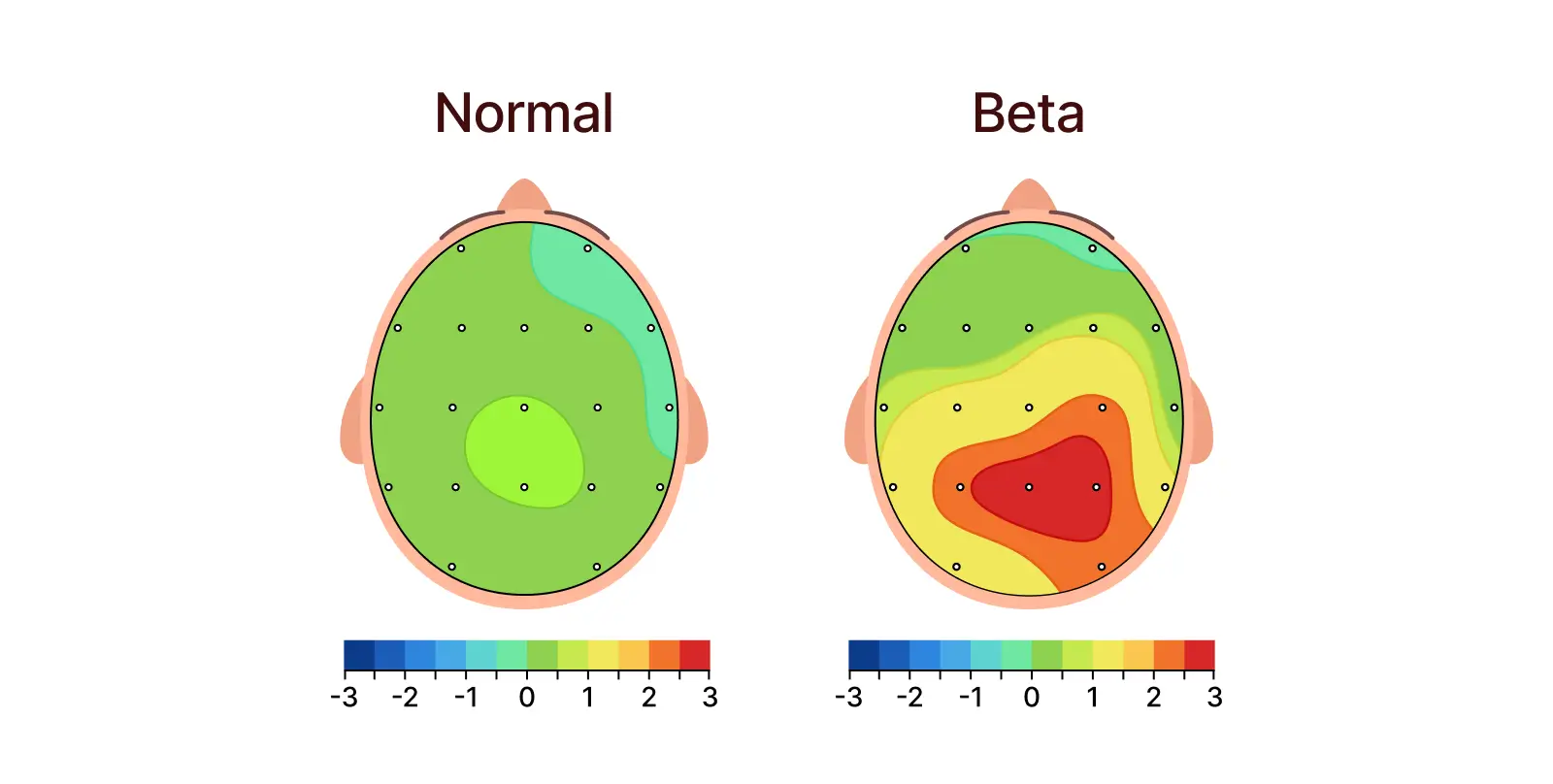
Alpha waves are associated with relaxed wakefulness. When alpha activity is reduced or dysregulated, it can be harder for the brain to settle, reset, and shift out of stress.
Studies of anxiety disorders frequently report elevated beta activity and altered alpha activity, which supports the idea that some patients are living in a near-constant alert state, even when there is no immediate stressor. ⓘ
What this feels like:
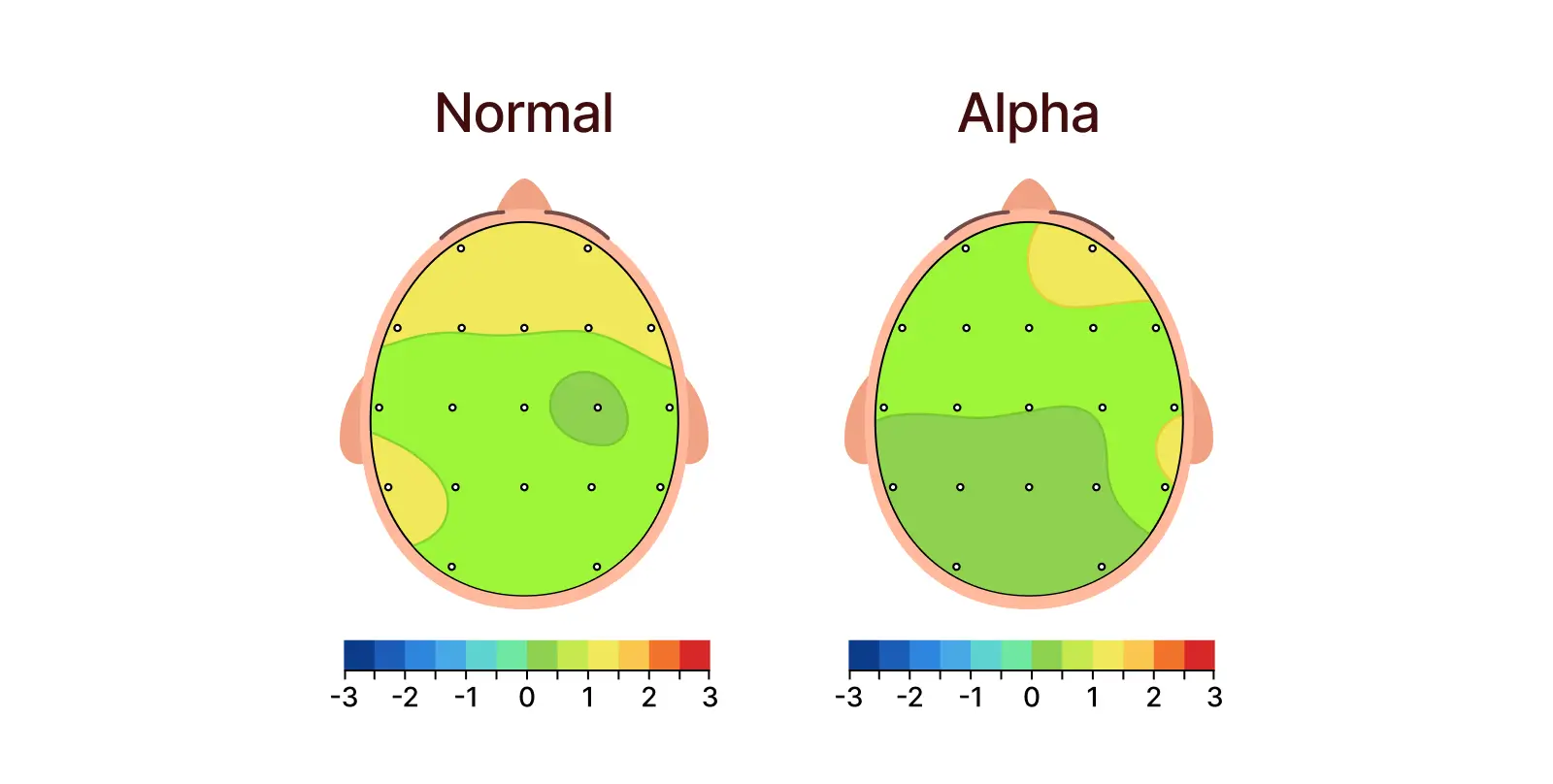
In some people, anxiety feels more emotional and physical than cognitive. The brain may stay in a threat-detection mode, leading to sudden surges of fear, tension, or dread even when there is no clear external danger.
What this may feel like:
Other people experience anxiety more as mental overcontrol. Thoughts loop, decisions feel hard, and the mind will not stop scanning for problems.
What this may feel like:
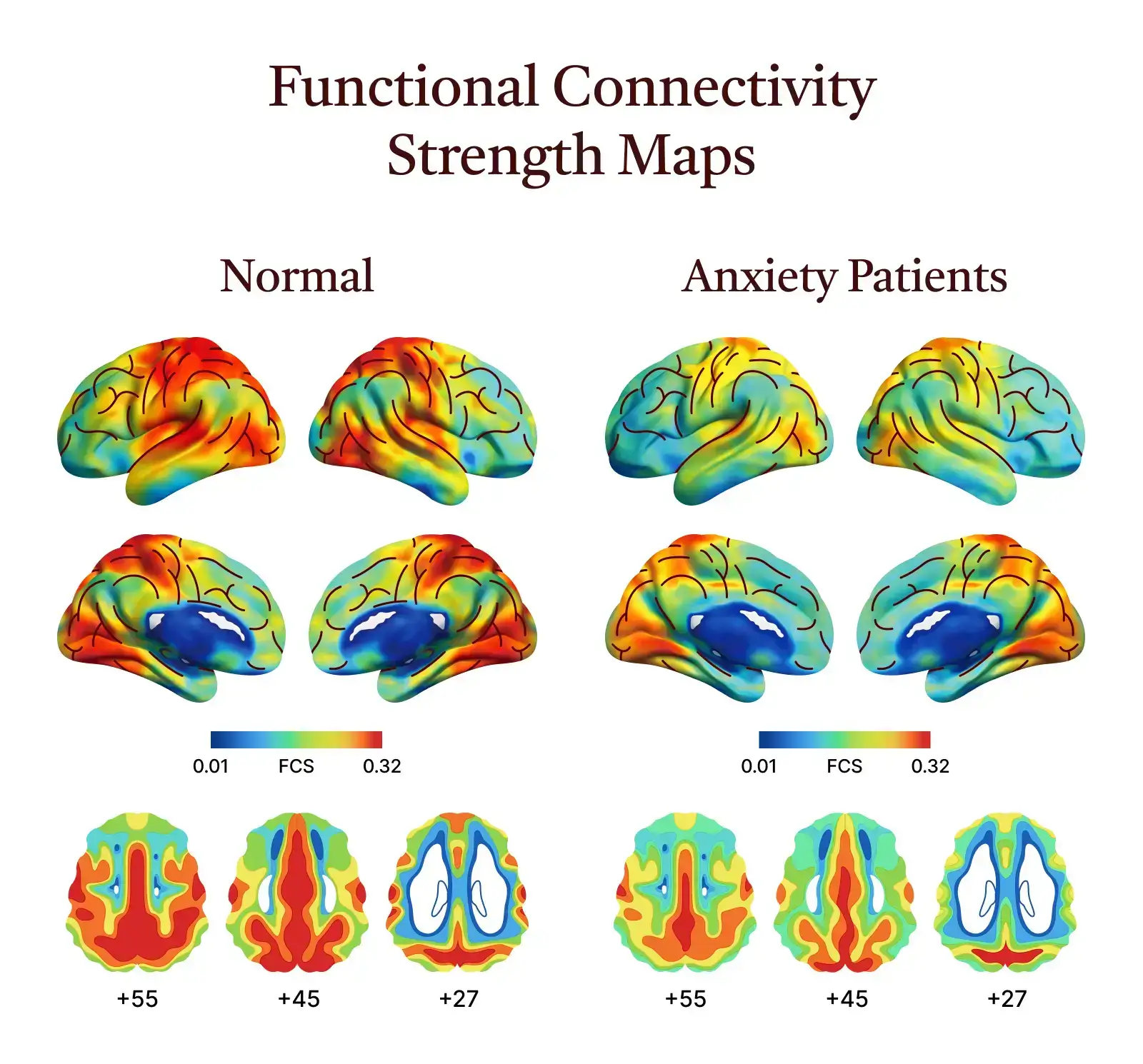
Newer EEG research in generalized anxiety disorder also points to abnormal connectivity and inefficient communication across networks, not just single-region overactivity.
Research suggests that anxiety is not just about over or under activity in one area, but how different brain networks coordinate attention, emotion, and stress response.
What this may feel like:
Brain mapping can be helpful if you are trying to decide what type of treatment to pursue next (whether approaches like TMS, biofeedback, or medication support are more likely to help based on your brain activity).
Brain mapping may be especially useful if:
Brain mapping isn’t a diagnosis for anxiety, but helps explain symptoms. For many patients, this is the first time anxiety feels explained in a way that makes sense.
At Indiana Center for Recovery, qEEG brain mapping is used as part of a more advanced, personalized approach to mental health care. The goal is not just to label symptoms, but to understand what is driving them and match treatment to those patterns.
After your brain map is complete, your brain mapping results are reviewed with a full clinical and medical evaluation to identify what may be contributing to anxiety and what types of treatment can be most effective.
Based on your results, your care plan may include:
Everything works together, so treatment is not fragmented or based on trial-and-error.
If you’ve been dealing with anxiety that doesn’t fully make sense or hasn’t improved, treatment at Indiana Center for Recovery can help bring clarity to what’s happening and what to do next. Call now for more information without commitment and 100% confidential.
You’re reading this for a reason. Even if you don’t know if you’re “ready”, now is the best time to reach out.
 100% Confidential
No judgement
No commitment
 Call (844) 650-0064
  Available Now
  Verify Your Insurance

Error: Contact form not found.
 Get Answers Now
You don’t have to figure this out alone. We can guide you through your options—completely confidential and with zero commitment.
100% Private