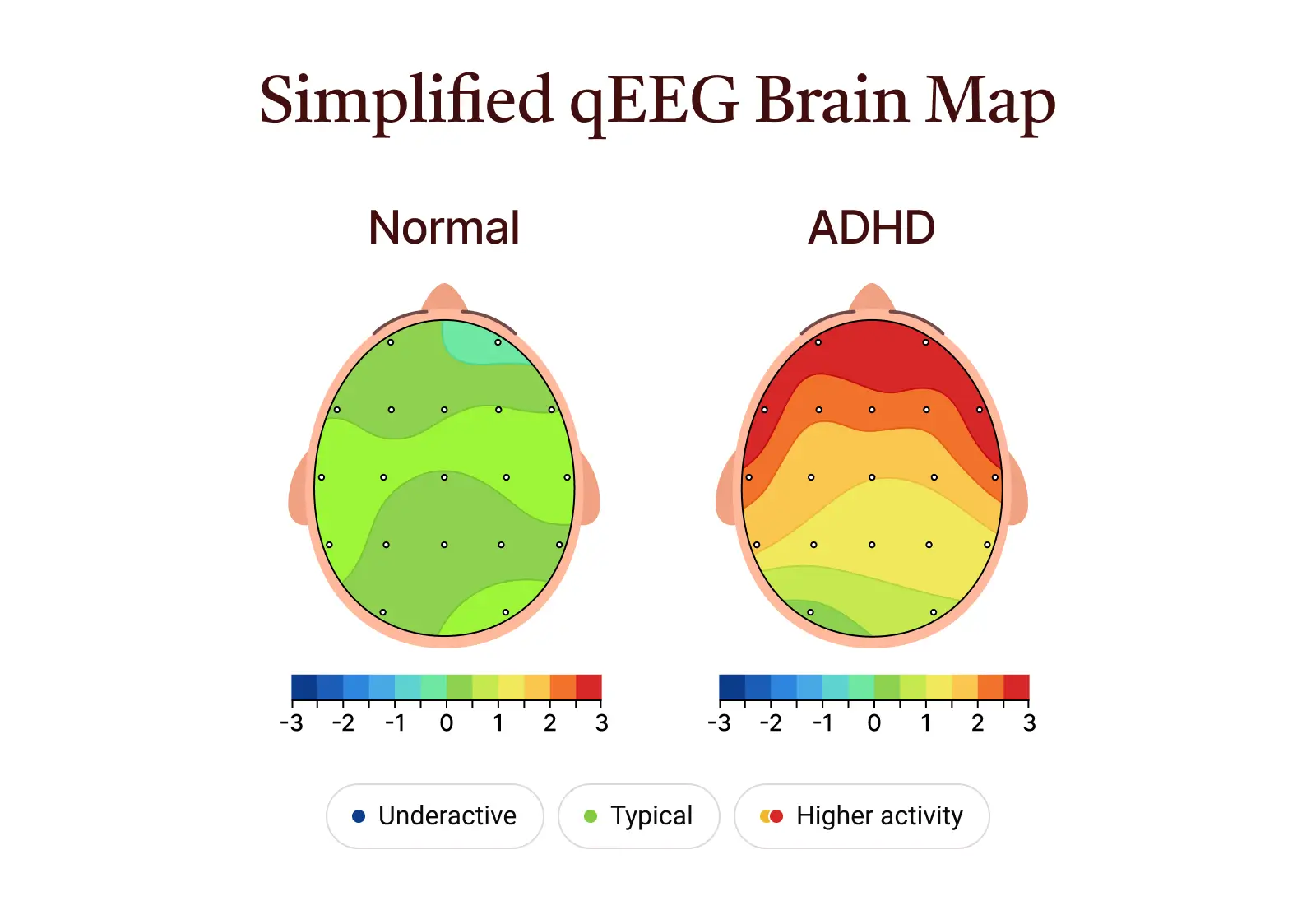
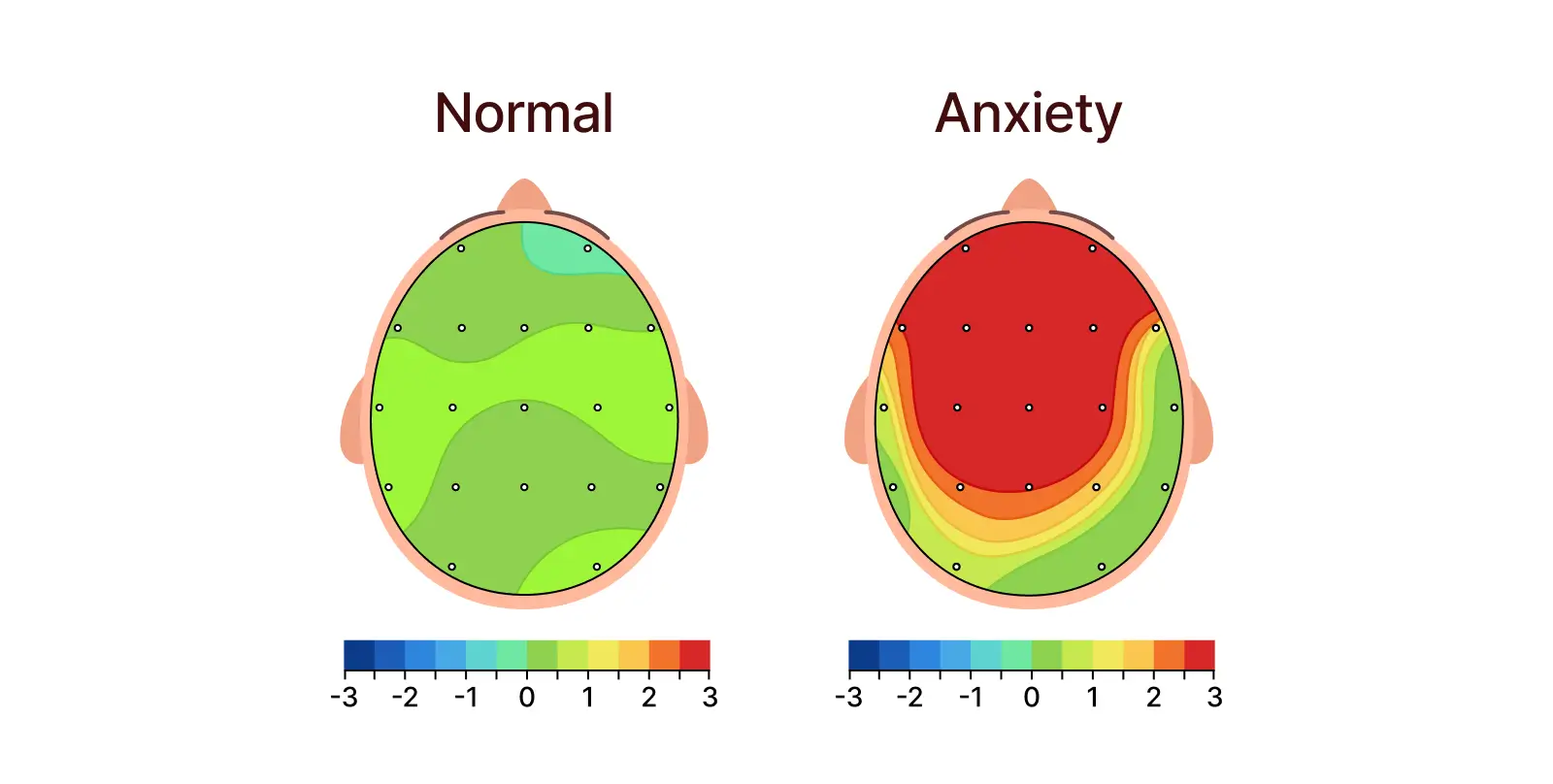
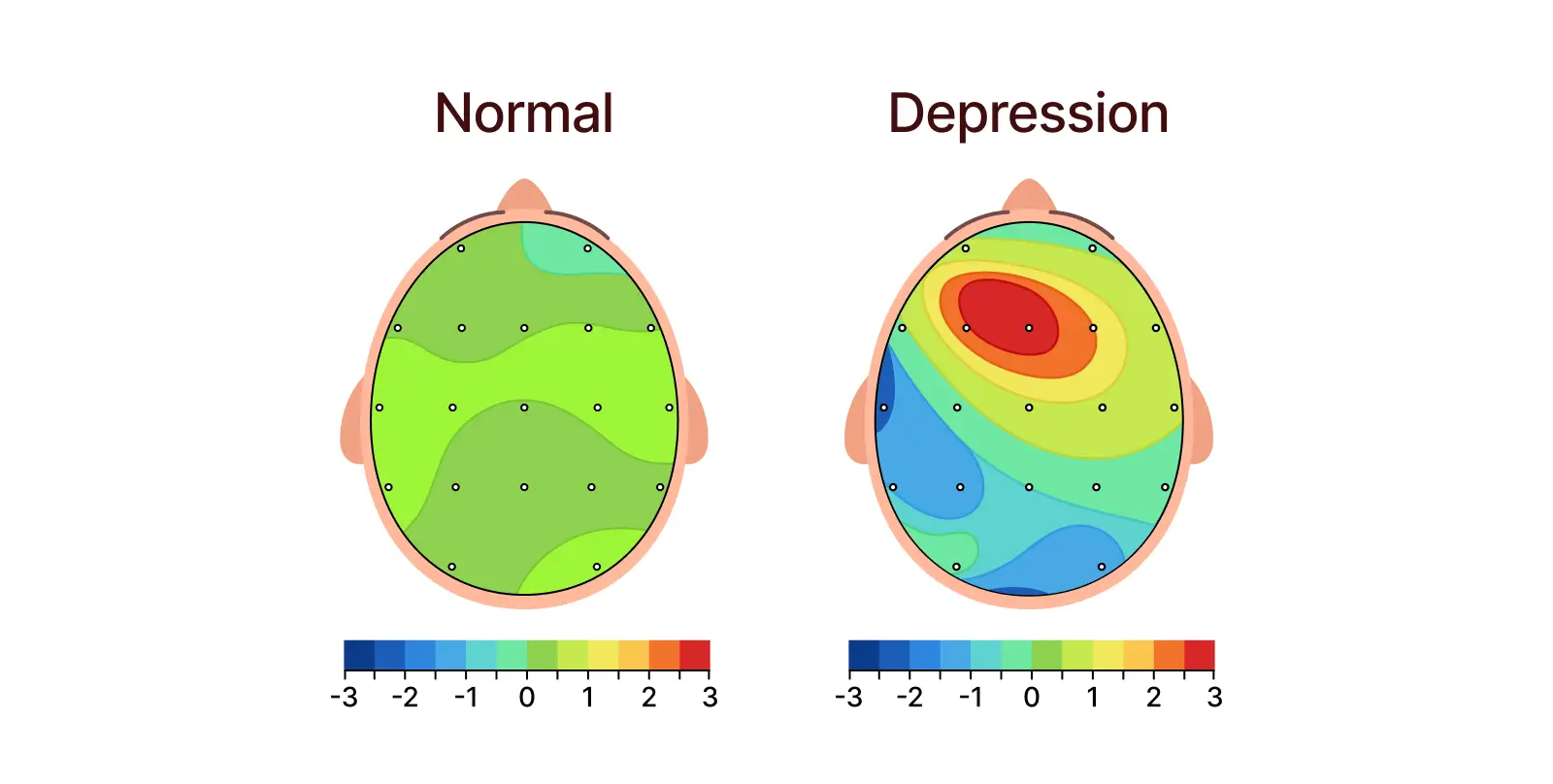
Most mental health symptoms are not caused by structural problems in the brain seen in traditional labs or scans. Instead, issues are related to how the brain is functioning. ⓘ
Brain mapping looks at brainwave activity in specific brain regions compared to a large database of people of similar demographics. It helps bring clarity to symptoms that have been dismissed or unhelped by standard treatment. ⓘ
For example:
You struggle with focus even if nothing appears “wrong”
You feel anxious without a clear external trigger
You feel mentally exhausted even after rest
What Can Brain Mapping Diagnose?
Brain mapping is a tool that gives us more insight into how your brain is functioning in real time. No single brain pattern equals a diagnosis. ⓘ
For example:
Two people with anxiety may have very different brain activity
The same brain activity pattern can show up in different conditions
While brain mapping is always interpreted alongside a full clinical evaluation, it can help to better understand and diagnose:
Attention-Deficit/Hyperactivity Disorder (ADHD) symptoms like difficulty focusing, starting tasks, or staying consistent are often linked to underactivity in the brain’s focus and control centers. When these areas aren’t fully engaged, it can make it harder to stay on track, even when you’re trying. This is where brain mapping for ADHD can help identify the underlying patterns.
Anxiety symptoms such as racing thoughts, constant worry, or feeling on edge are often tied to overactive threat and alert systems in the brain. Using brain mapping for anxiety can help pinpoint overactive areas driving this response. When these systems stay “on,” it can be difficult for the brain to shift into a calm or relaxed state. ⓘ
Bipolar symptoms involve shifts in mood, energy, and control that often reflect changes in how emotional and regulatory regions of the brain are functioning. These patterns can vary depending on whether someone is in a low or elevated state.
Symptoms like low motivation, emotional heaviness, or loss of interest are often linked to reduced activity in areas responsible for drive and regulation, along with increased activity in emotional processing centers. Using brain mapping for depression can help identify these imbalances and guide targeted treatment.
Common Brain Regions:
Limbic system (overactive or dysregulated, inferred)
Obsessive-compulsive disorder (OCD) symptoms, including intrusive thoughts and repetitive behaviors, are often connected to overactive circuits involved in control, error detection, and thought regulation. This can make it difficult to shift away from certain thoughts or behaviors.
Post-Traumatic Stress Disorder (PTSD) symptoms like hypervigilance, emotional reactivity, and difficulty feeling safe are often related to an overactive threat response and reduced regulation from higher-level control areas of the brain.
Patients often think in terms of diagnosis, but brain mapping looks deeper.
Most people don’t fit neatly into one diagnosis pattern. It’s common to see overlapping patterns that don’t fully match a single diagnosis but still explain what you’re feeling. ⓘ
For example, you may not meet the criteria for ADHD, but if the prefrontal cortex is underactive, it can still affect your focus and follow-through. That pattern can be treated directly and may explain why therapies haven’t fully worked.
Instead of guessing, brain mapping helps identify what’s actually going on and where treatment should be focused.
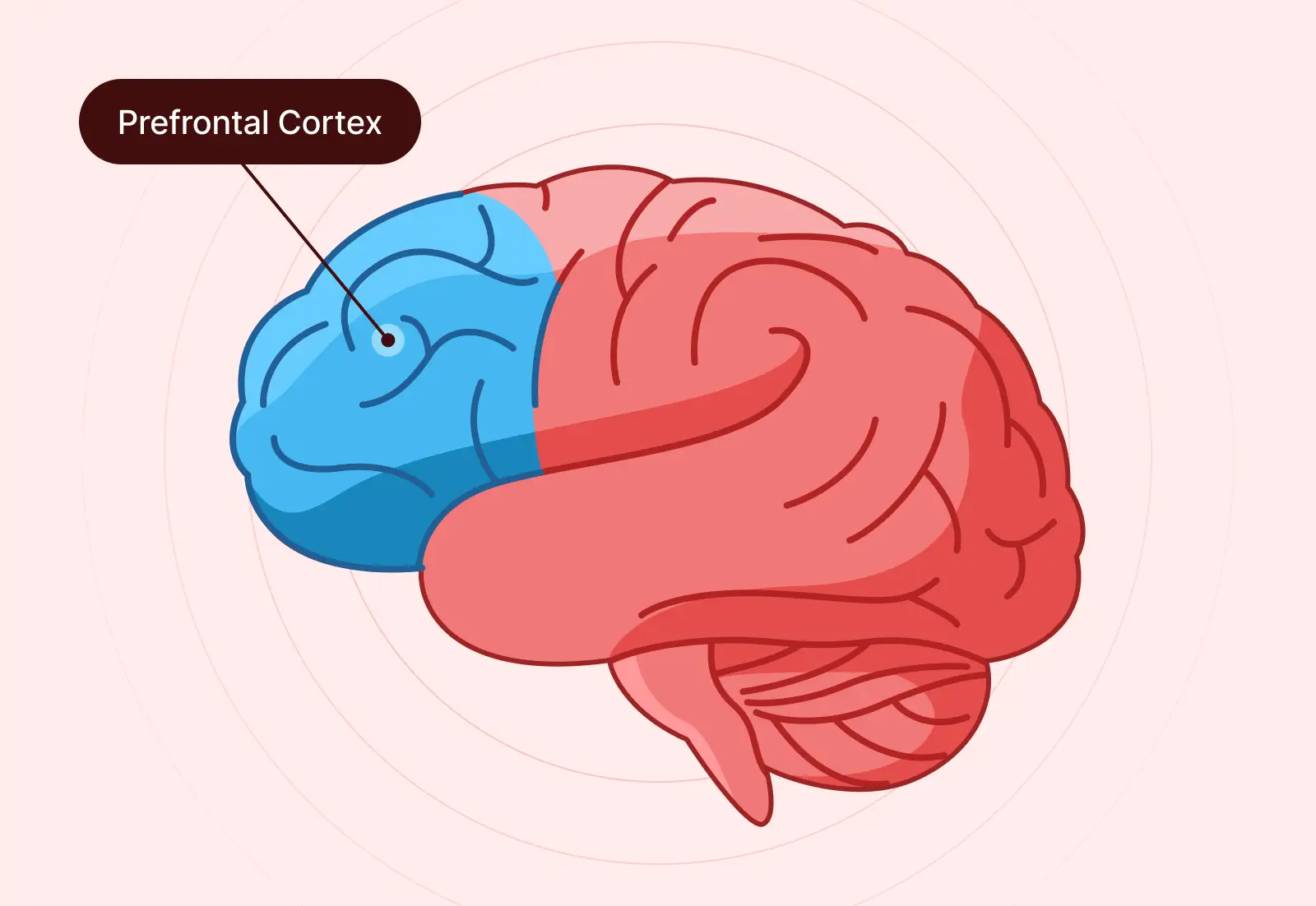
Prefrontal Cortex
The prefrontal cortex is the area in the front of the brain, behind your forehead. It is responsible for focus, decision-making, impulse control, and emotional regulation. It is one of the most important regions for day-to-day functioning.
Underactive
Overactive
Symptoms
Trouble focusing or staying on task
Procrastination or lack of follow-through
Acting impulsively without thinking
Feeling mentally “checked out”
Overthinking everything
Difficulty making decisions
Rigid thinking or getting stuck on thoughts
Constant self-criticism
Associated Diagnosis
ADHD
Anxiety
OCD
Underactive
Symptoms
Trouble focusing or staying on task
Procrastination or lack of follow-through
Acting impulsively without thinking
Feeling mentally “checked out”
Associated Diagnosis
ADHD
Overactive
Symptoms
Overthinking everything
Difficulty making decisions
Rigid thinking or getting stuck on thoughts
Constant self-criticism
Associated Diagnosis
Anxiety
OCD
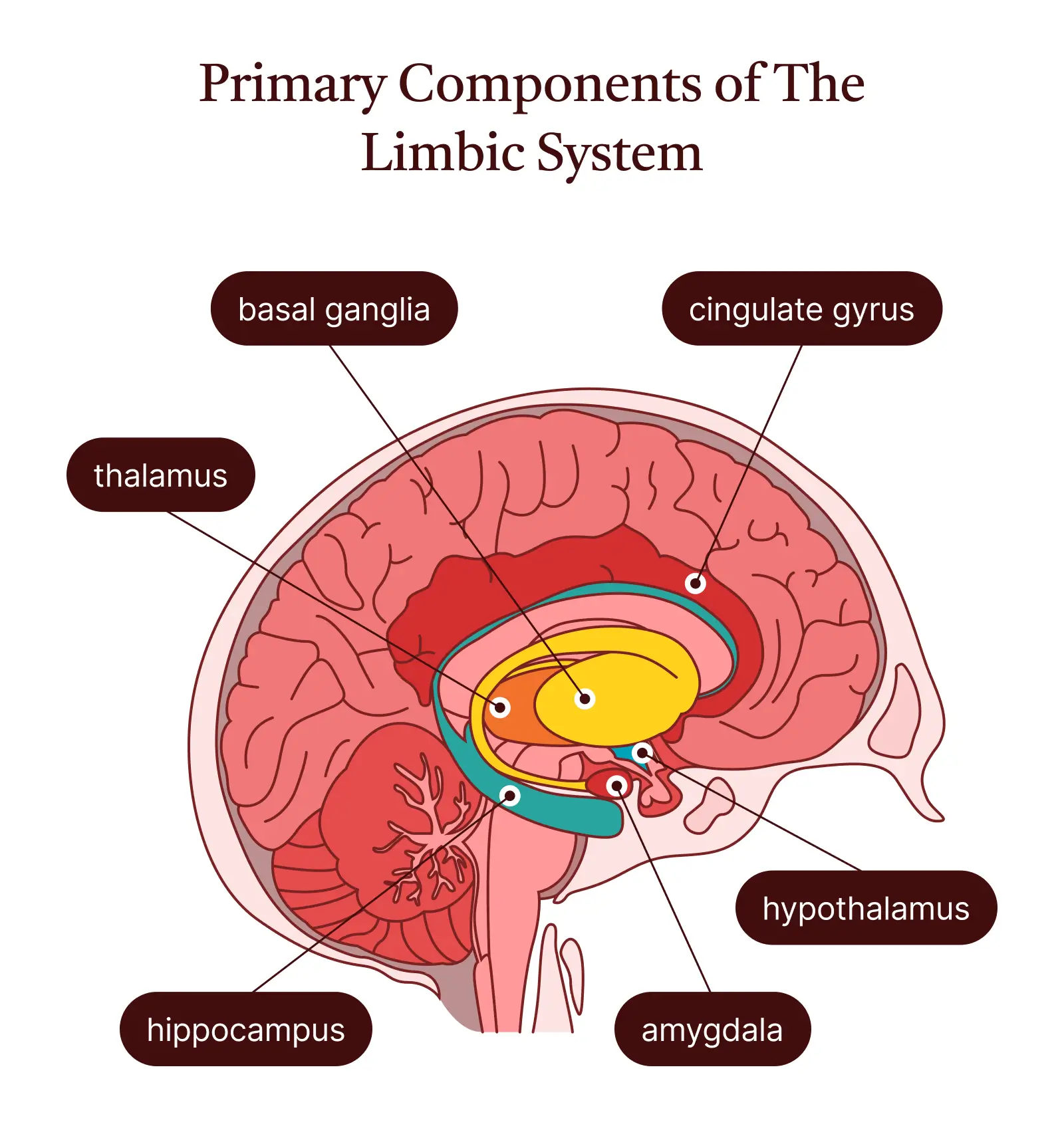
Limbic System
The limbic system is deep in the center of the brain and helps regulate mood, emotions, and threat detection.
Dysregulated
Overactive
Symptoms
Emotional numbness
Lack of motivation
Feeling disconnected from people or life
Persistent sadness or heaviness
Emotional sensitivity
Negative thought loops
Feeling stuck in a low mood
Associated Diagnosis
Patterns that can be seen across multiple diagnosis
Depression
Mood disorders
Dysregulated
Symptoms
Emotional numbness
Lack of motivation
Feeling disconnected from people or life
Associated Diagnosis
Patterns that can be seen across multiple diagnosis
Overactive
Symptoms
Persistent sadness or heaviness
Emotional sensitivity
Negative thought loops
Feeling stuck in a low mood
Associated Diagnosis
Depression
Mood disorders
Amygdala
The amygdala is the alarm system of the limbic system that detects danger and activates fear and the stress response. It is located deep inside the center of the brain.
Not typically a primary focus in QEEG interpretation
Overactive
Symptoms
Constant anxiety or fear
Panic attacks
Hypervigilance
Feeling on edge even in safe situations
Associated With
Anxiety disorders
PTSD
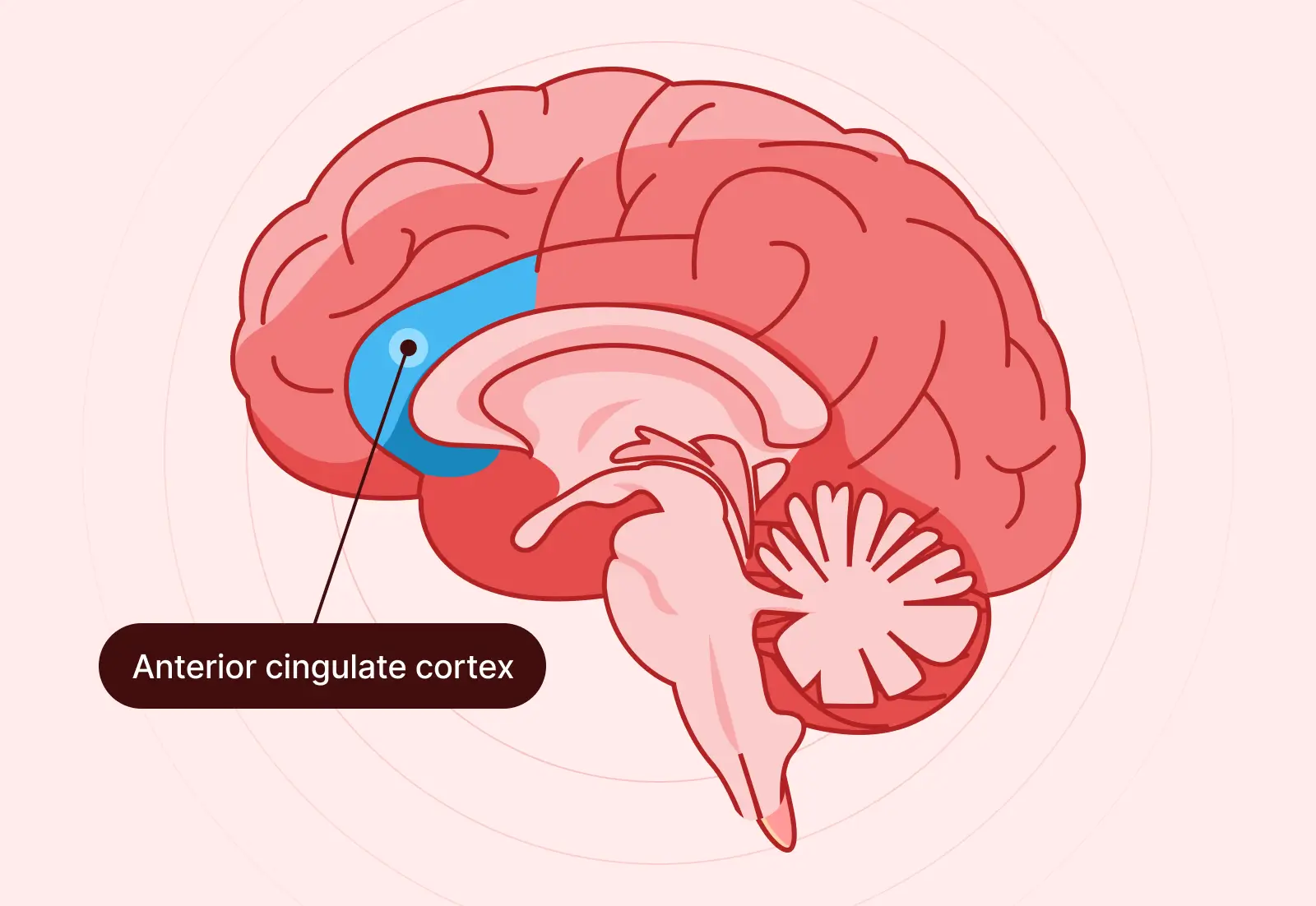
Anterior Cingulate Cortex
The anterior cingulate cortex sits near the middle of the brain, between the frontal lobes. It plays a key role in attention, error detection, and the ability to shift between thoughts.
Underactive
Overactive
Symptoms
Difficulty focusing
Trouble switching tasks
Feeling mentally scattered
Easily distracted
Getting stuck on thoughts
Rumination
Obsessive thinking
Difficulty letting things go
Associated Diagnosis
ADHD (partial involvement)
OCD
Anxiety
Underactive
Symptoms
Difficulty focusing
Trouble switching tasks
Feeling mentally scattered
Easily distracted
Associated Diagnosis
ADHD (partial involvement)
Overactive
Symptoms
Getting stuck on thoughts
Rumination
Obsessive thinking
Difficulty letting things go
Associated Diagnosis
OCD
Anxiety
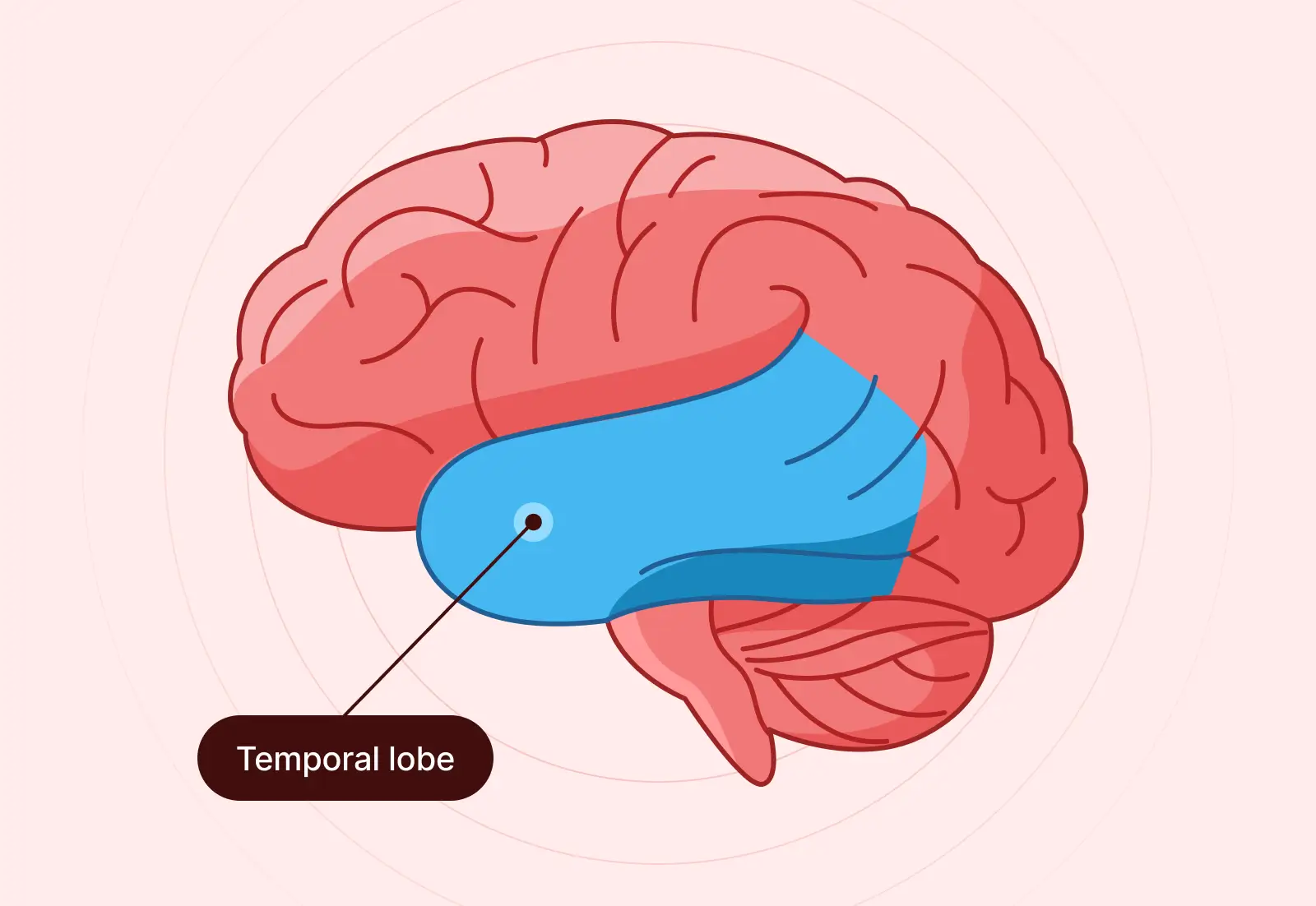
Temporal Lobes
The temporal lobes are located on the sides of the brain near the ears. They are involved in memory, emotional stability, and processing sounds and language.
Underactive
Overactive / Dysregulated
Symptoms
Memory problems
Difficulty processing language or information
Slower cognitive processing
Mood swings
Irritability
Emotional instability
Heightened anxiety or fear responses
Associated Diagnosis
Patterns that can be seen across multiple diagnosis
Mood disorders
Trauma-related symptoms
Anxiety disorders
Underactive
Symptoms
Memory problems
Difficulty processing language or information
Slower cognitive processing
Associated Diagnosis
Patterns that can be seen across multiple diagnosis
Overactive / Dysregulated
Symptoms
Mood swings
Irritability
Emotional instability
Heightened anxiety or fear responses
Associated Diagnosis
Mood disorders
Trauma-related symptoms
Anxiety disorders
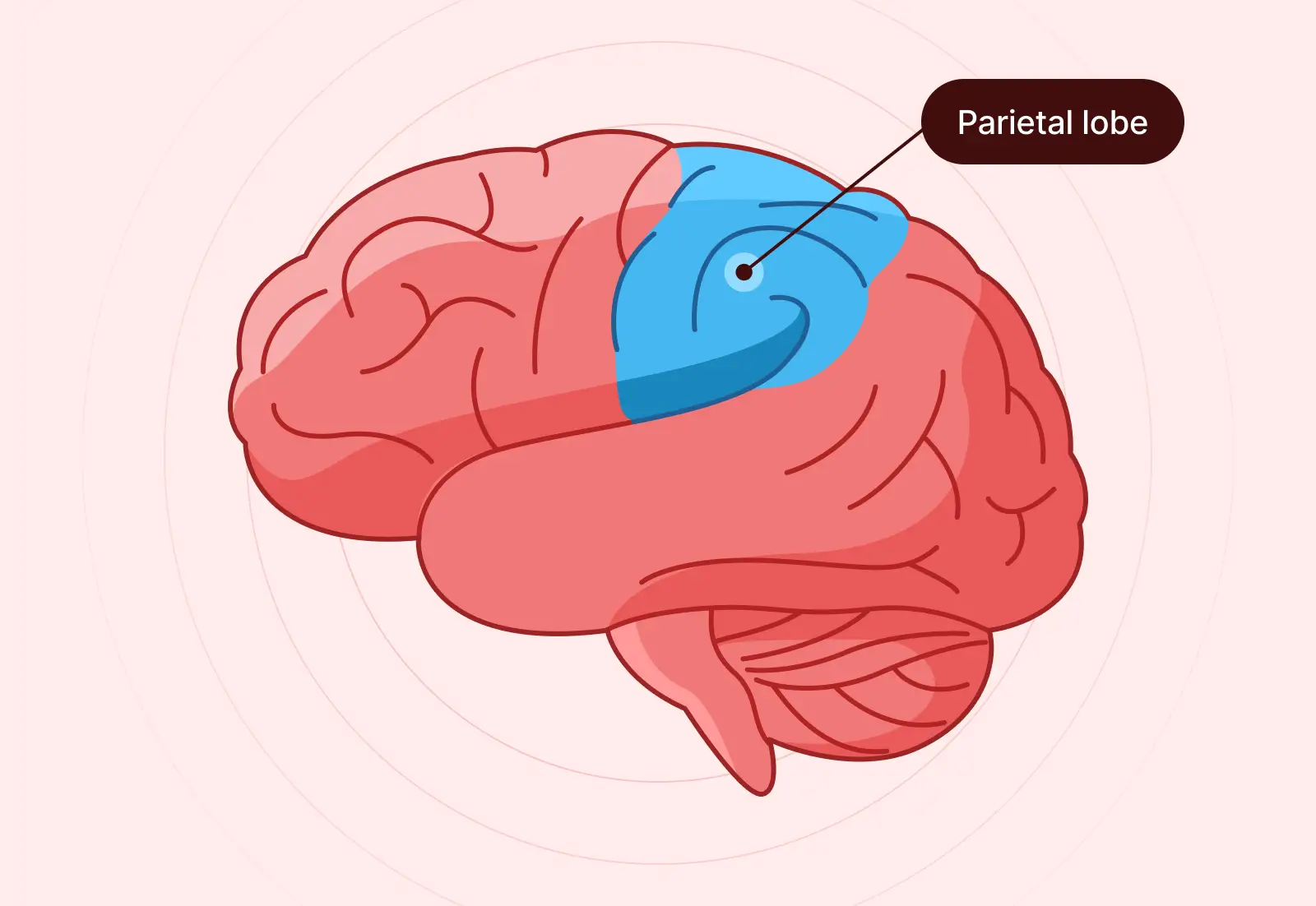
Parietal Lobes
The parietal lobes are located toward the top and back of the brain. They help process sensory information and maintain awareness of your body and environment.
Underactive
Overactive
Symptoms
Brain fog
Feeling disconnected from your body
Difficulty processing information
Sensory overload
Feeling overstimulated
Difficulty filtering sensory input
Associated Diagnosis
Patterns that can be seen across multiple diagnosis
ADHD / ASD (partial involvement)
Anxiety
Underactive
Symptoms
Brain fog
Feeling disconnected from your body
Difficulty processing information
Associated Diagnosis
Patterns that can be seen across multiple diagnosis
Overactive
Symptoms
Sensory overload
Feeling overstimulated
Difficulty filtering sensory input
Associated Diagnosis
ADHD / ASD (partial involvement)
Anxiety
Occipital Lobes
The occipital lobes are located at the back of the brain and are responsible for visual processing. While they are measured in brain mapping, they are not typically a primary focus in interpretation.
In some cases, patterns in this area may relate to visual sensitivity or feeling overstimulated in busy environments, but they are rarely used on their own to guide diagnosis or treatment.
Symptoms Related to Different Brainwave Patterns
Most symptoms are not caused by just one brain region.
They are usually a combination of:
Where activity is happening
How that activity is functioning
How different areas of the brain are working together
Understanding these patterns can help explain why symptoms feel the way they do and guide more targeted treatment.
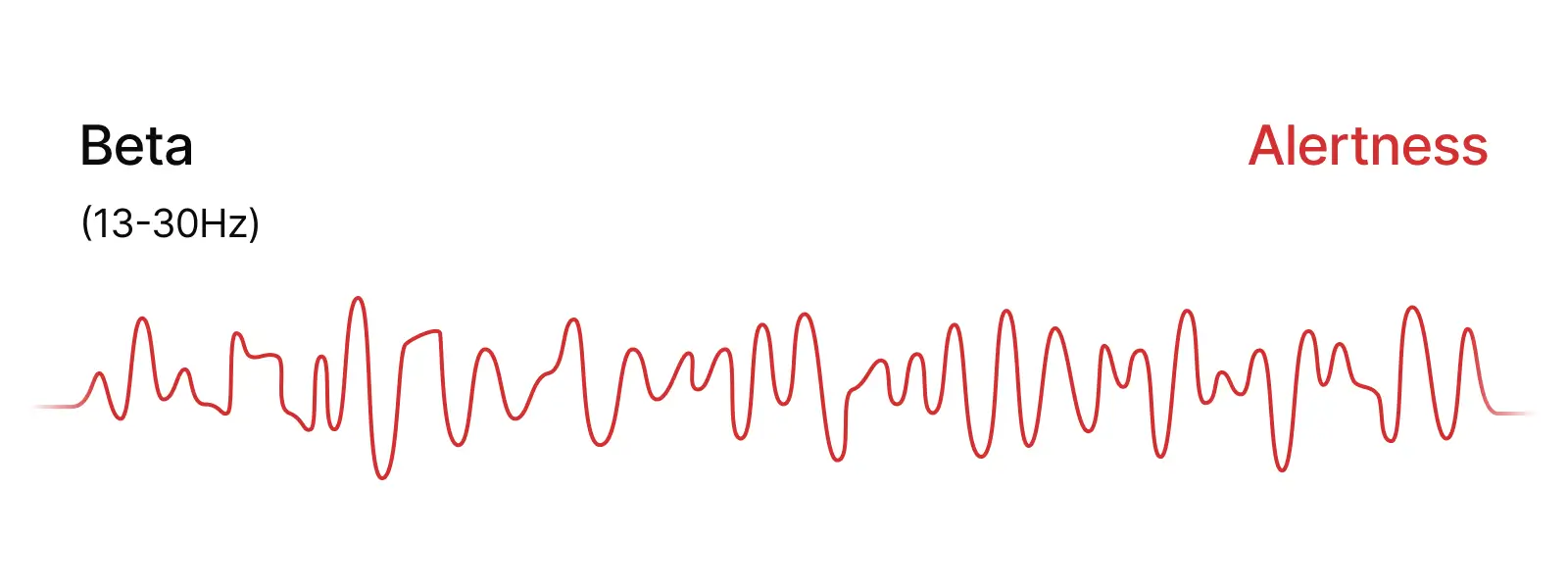
Beta Waves
Beta waves are involved in focus, alertness, and active thinking. They help you stay engaged, solve problems, and respond to what’s happening around you.
High
Low
Overview
Brain is in a constant state of alertness
Brain is not producing enough activity for focus and engagement
Symptoms
Racing thoughts
Anxiety or panic
Feeling on edge
Trouble sleeping
Difficulty concentrating
Low mental energy
Trouble staying engaged
Slower thinking
Commonly Seen In
Anxiety disorders
PTSD
OCD
ADHD
Depression
High
Overview
Brain is in a constant state of alertness
Symptoms
Racing thoughts
Anxiety or panic
Feeling on edge
Trouble sleeping
Commonly Seen In
Anxiety disorders
PTSD
OCD
Low
Overview
Brain is not producing enough activity for focus and engagement
Symptoms
Difficulty concentrating
Low mental energy
Trouble staying engaged
Slower thinking
Commonly Seen In
ADHD
Depression
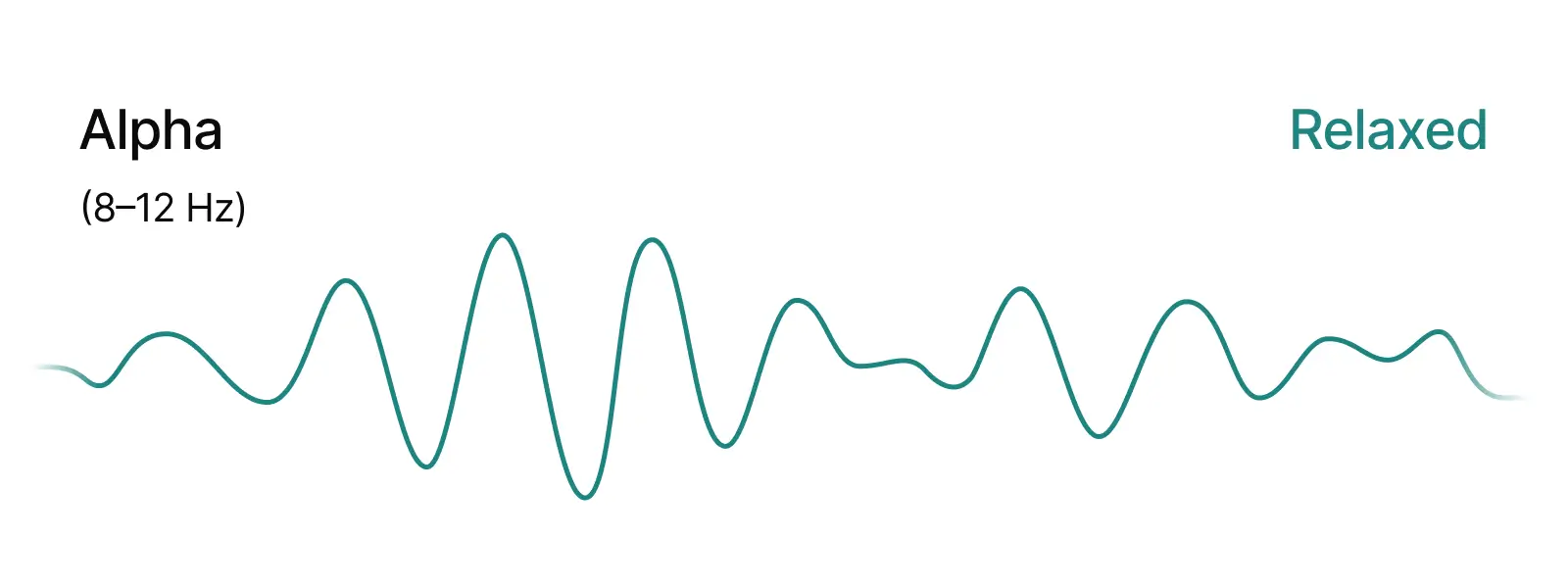
Alpha Waves
Alpha waves help the brain relax and reset. They play a role in calmness, mental clarity, and the ability to shift out of stress.
High
Low
Overview
Brain is too relaxed or disengaged when it should be alert
Brain has difficulty entering a calm, relaxed state
Symptoms
Feeling spacey or disconnected
Zoning out
Low mental clarity
Always feeling tense
Hard to relax
Mental restlessness
Commonly Seen In
ADHD
Depression
Dissociation patterns
Anxiety
Chronic stress
Sleep issues
High
Overview
Brain is too relaxed or disengaged when it should be alert
Symptoms
Feeling spacey or disconnected
Zoning out
Low mental clarity
Commonly Seen In
ADHD
Depression
Dissociation patterns
Low
Overview
Brain has difficulty entering a calm, relaxed state
Symptoms
Always feeling tense
Hard to relax
Mental restlessness
Commonly Seen In
Anxiety
Chronic stress
Sleep issues
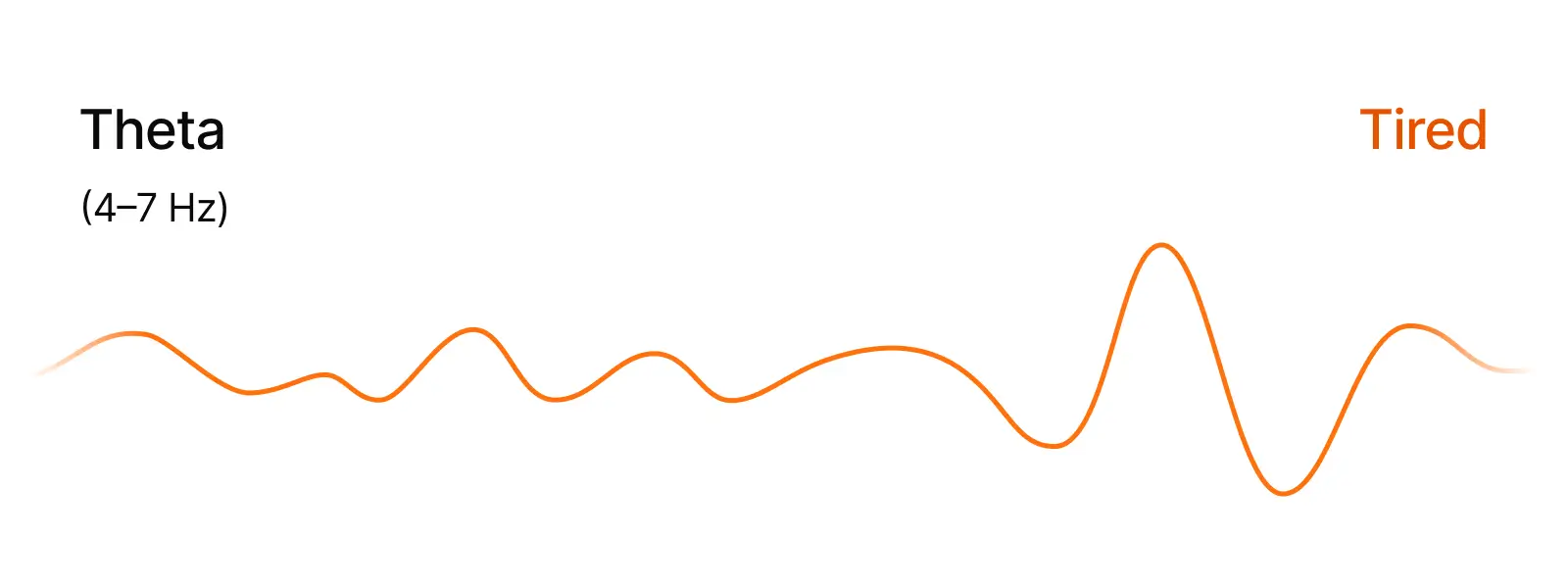
Theta Waves
Theta waves are linked to internal processing, memory, and attention. They are important for creativity and reflection, but too much or too little can affect focus.
High
Low
Overview
Brain is operating more slowly than expected in key areas
Reduced internal processing and mental flexibility
Symptoms
Brain fog
Zoning out
Trouble focusing
Low motivation
Difficulty accessing emotions
Rigid thinking
Reduced creativity
Commonly Seen In
ADHD
Depression
Cognitive fatigue
Less commonly emphasized clinically
High
Overview
Brain is operating more slowly than expected in key areas
Symptoms
Brain fog
Zoning out
Trouble focusing
Low motivation
Commonly Seen In
ADHD
Depression
Cognitive fatigue
Low
Overview
Reduced internal processing and mental flexibility
Symptoms
Difficulty accessing emotions
Rigid thinking
Reduced creativity
Commonly Seen In
Less commonly emphasized clinically
Brainwave Balance & Connection
If activity isn’t balanced across the brain or if different parts of the brain are not communicating well, these can lead to symptoms affecting mood, emotions and stability.
Brain Region Balance (Asymmetry)
Brain Connectivity (Communication Between Regions)
Overview
One area or side of the brain is more active than another
Brain regions are not communicating efficiently
Symptoms
Mood swings
Emotional instability
Negative thought patterns
Difficulty organizing thoughts
Inconsistent performance
Feeling scattered or overwhelmed
Commonly Seen In
Mood disorders
Anxiety
Emotional dysregulation
ADHD
Trauma-related conditions
Cognitive processing issues
Brain Region Balance (Asymmetry)
Overview
One area or side of the brain is more active than another
Symptoms
Mood swings
Emotional instability
Negative thought patterns
Commonly Seen In
Mood disorders
Anxiety
Emotional dysregulation
Brain Connectivity (Communication Between Regions)
Overview
Brain regions are not communicating efficiently
Symptoms
Difficulty organizing thoughts
Inconsistent performance
Feeling scattered or overwhelmed
Commonly Seen In
ADHD
Trauma-related conditions
Cognitive processing issues
NOTE: Gamma and delta waves are not used because they both do not have a consistent connection to mental health systems or diagnosis. Also, gamma waves are hard to measure reliably with qEEG, and delta waves have little activity outside of deep sleep.
How We Use Brain Mapping
Once brain mapping identifies patterns, the next step is using that information in a way that actually helps you feel better.
Instead of relying on trial and error, it allows your mental health treatment to be more focused and intentional. The goal is to understand what is driving your symptoms and address those patterns directly.