
Clinically Reviewed by:

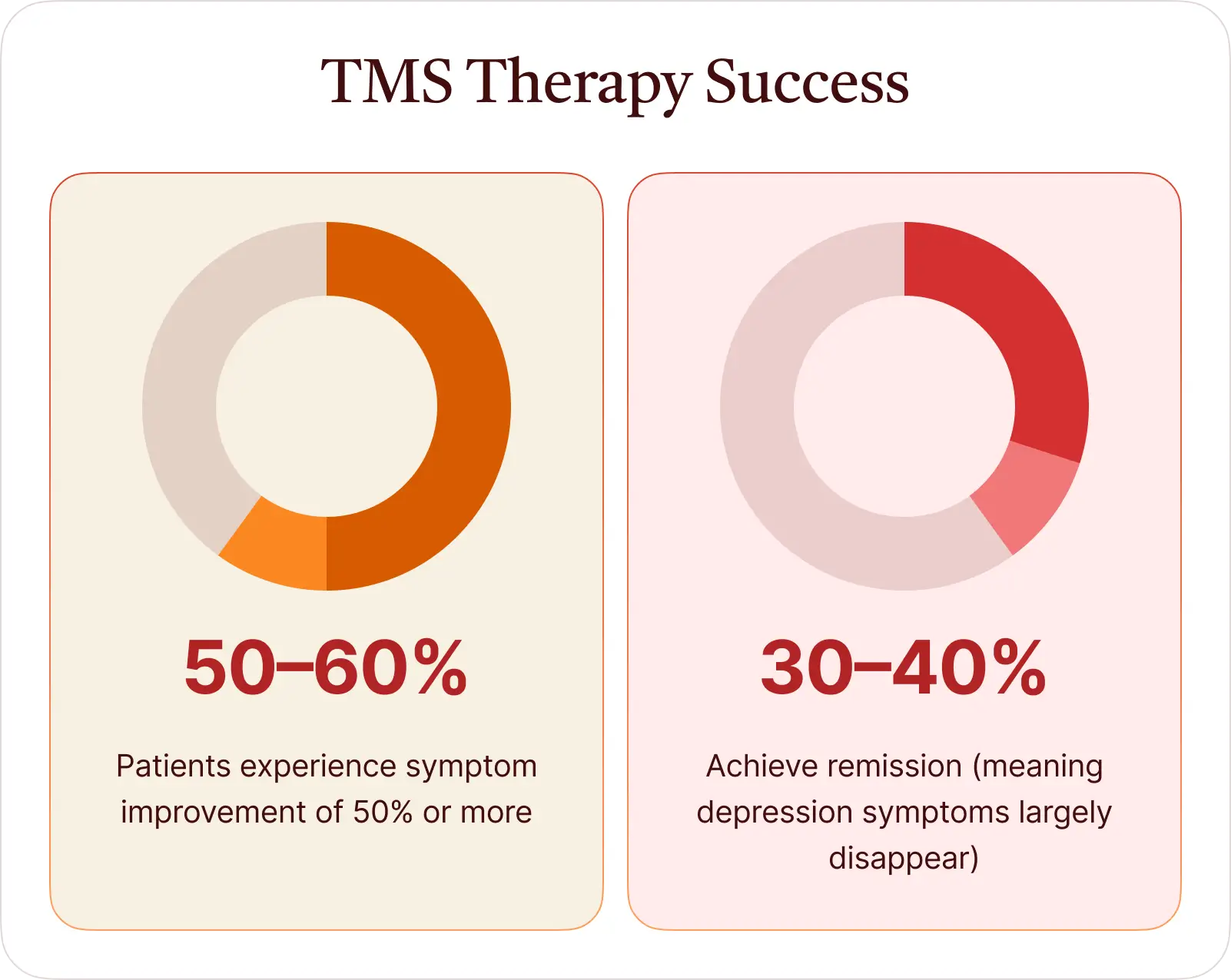
Large clinical studies consistently find that a significant portion of patients using Transcranial Magnetic Stimulation (TMS) experience meaningful symptom improvement, and some reach full remission.
Approximate Number of Studies
What the research is less clear about is why TMS therapy works well for some but not others. Depression and other mental health conditions involve complex brain circuits, genetics, and unique life factors. So, no one treatment works the same for everyone.
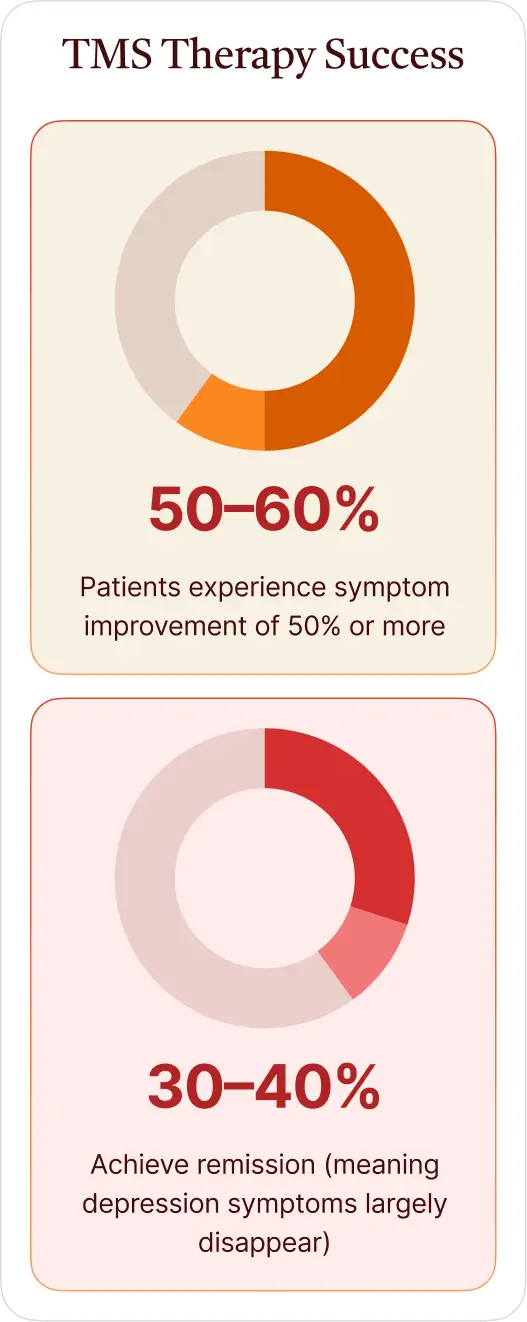
Across multiple clinical trials and real-world treatment studies most findings cluster around:
Both outcomes represent meaningful improvement in people who previously struggled to respond to other treatments.
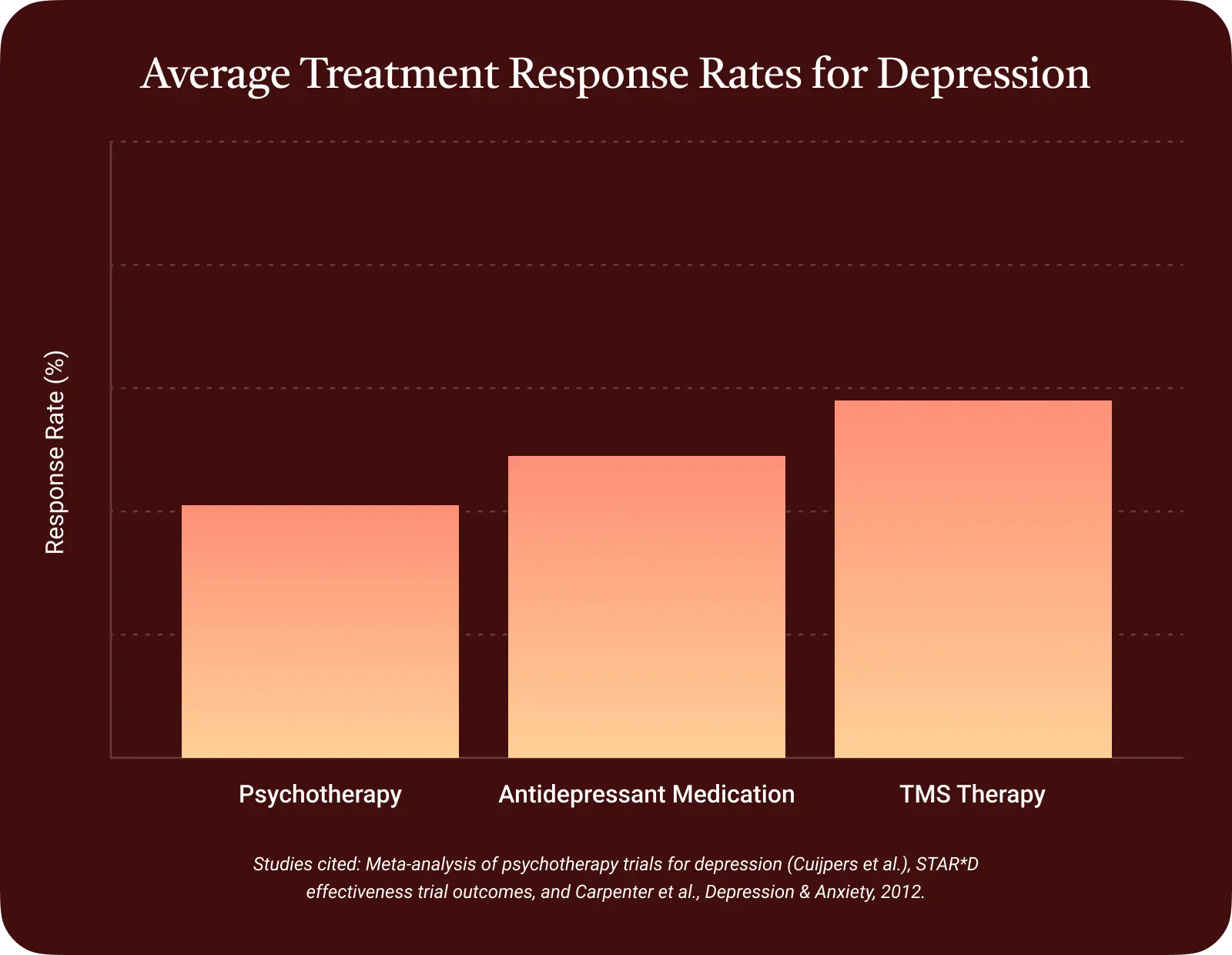
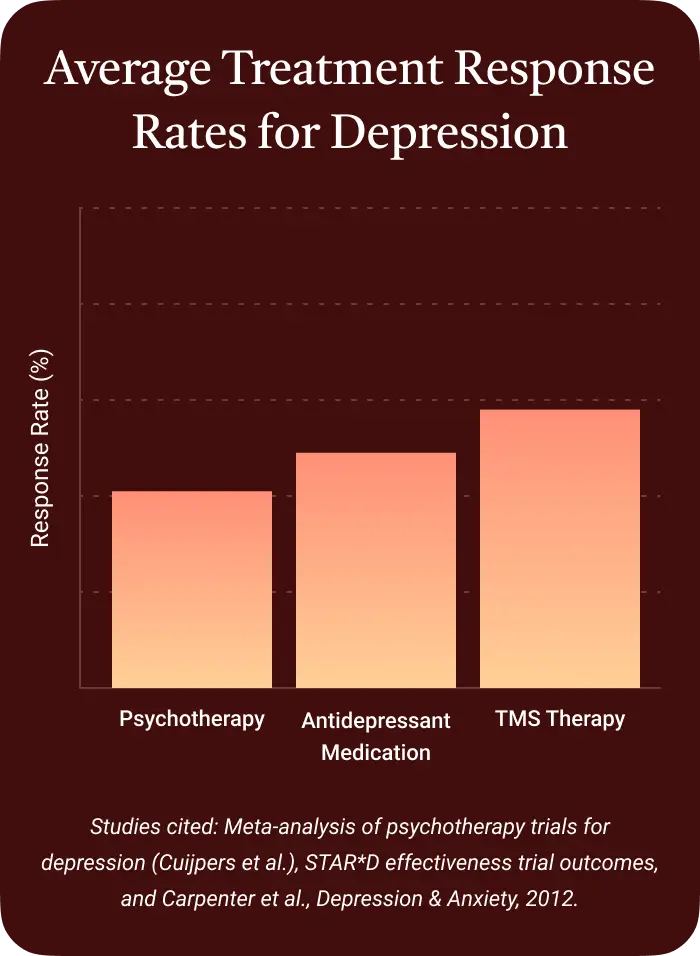
TMS therapy for depression is well supported by research and clinical evidence. In a 2013 meta-analysis of 29 studies, TMS produced 3-4 times greater remission rates than control patients, who were put into a TMS machine but not actually given the brain stimulation. ⓘ
While TMS can be effective when medication and psychotherapy (talk therapy) haven’t helped, over a dozen studies show that TMS used alongside antidepressants and talk therapy produce better outcomes than a singular treatment alone. ⓘ
TMS looks promising for anxiety, though there is much less data and the results aren’t as clear as for depression. A 2025 meta-analysis concluded that TMS combined with medication was more effective than the medication alone with no serious side effects or adverse events. ⓘ
Several studies suggest that patients with anxiety respond better to TMS if the anxiety occurs alongside depression, rather than an anxiety disorder alone. ⓘ
TMS treatment shows promising results for PTSD, though there is less research than there is for depression. In a meta-analysis of 17 clinical studies, patients receiving TMS experienced significantly greater reductions in PTSD symptoms compared to control patients who received sham stimulation (a placebo version of the treatment that does not actually stimulate the brain).ⓘ
Researchers concluded that TMS may be an effective treatment for PTSD, but more studies are needed to determine which treatment protocols work best and which patients are most likely to benefit.
Several studies have found that TMS can produce meaningful improvements in bipolar depression, similar to results seen in major depressive disorder.
A systematic review analyzing 49 studies (1,593 patients) found that TMS showed meaningful improvements in bipolar depression symptoms, with response and remission rates similar to those seen in unipolar depression which, again, has been heavily studied.ⓘ
TMS is not used during manic or hypomanic episodes, because stimulation could worsen mania in some patients.
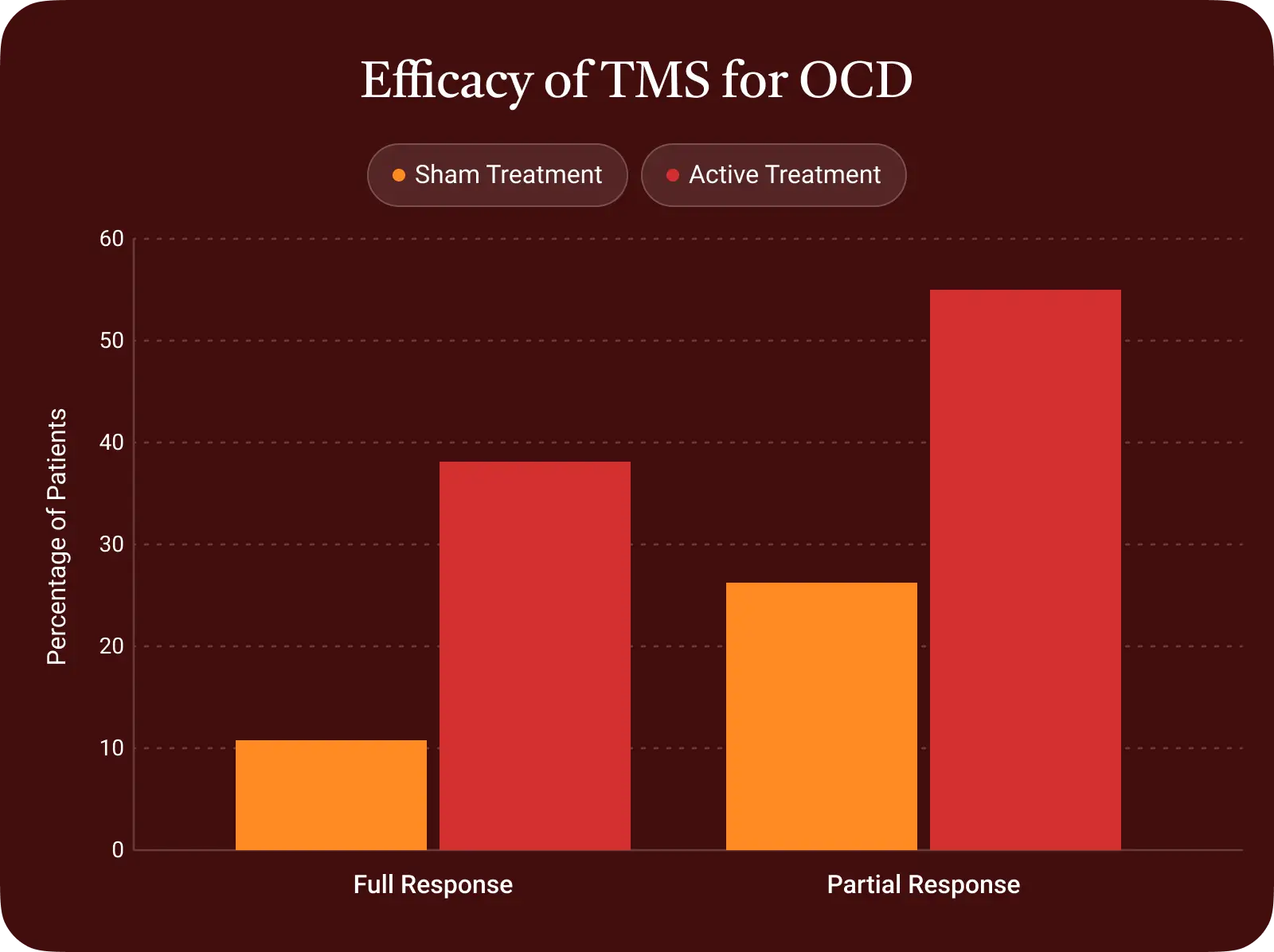
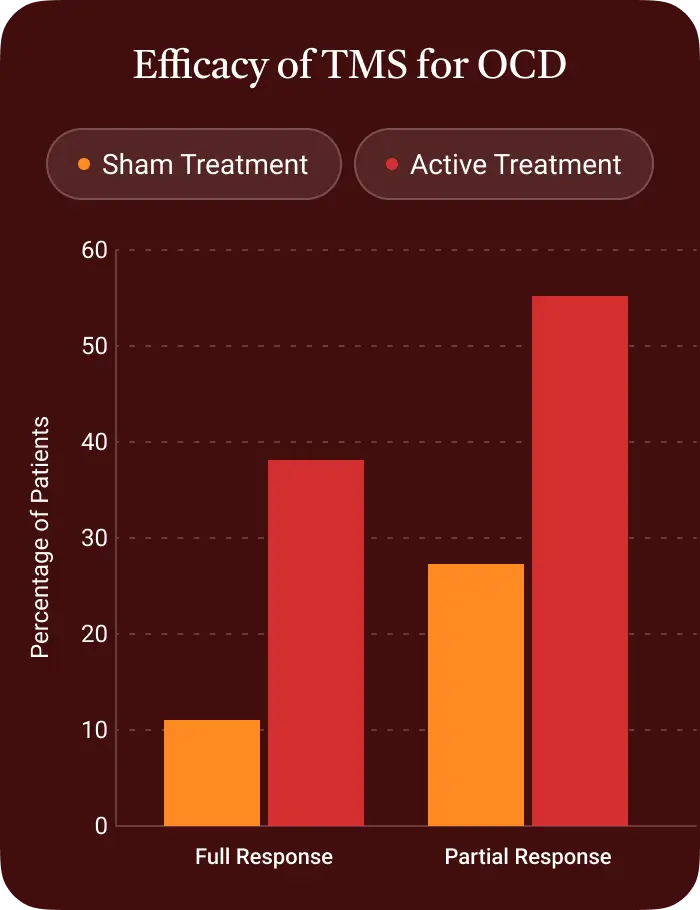
TMS is effective enough for OCD that there is an FDA-cleared protocol.ⓘ The evidence base is stronger than it is for anxiety or PTSD.
In a 2023 meta-analysis of 25 randomized controlled trials, patients receiving TMS were about 3 times more likely to experience meaningful improvement in OCD symptoms compared to control patients who did not receive real brain stimulation.ⓘ
The same analysis also found that OCD patients with depression improved more, which may explain why some patients respond better than others.
Research suggests TMS is more likely to work when:
Several studies suggest that patients with both depression and severe anxiety are less likely to achieve remission in depression-focused TMS protocols. Though this is not absolute and many patients with anxiety or complex symptoms still respond very well.
Other factors that influence outcomes:
Most patients notice some improvement between weeks 2 and 4 of treatment.
Weeks 1–2: little change for many patients
Weeks 2–4: early improvements such as better sleep or energy
Weeks 4–6: clearer mood improvement and reduced symptoms
Some people respond earlier, while others do not notice major changes until the end of the treatment course.
TMS changes are often subtle at first. Many patients describe noticing small improvements in daily functioning before their mood fully improves.
Common early signs include:
For many people, improvement builds gradually over several weeks as the brain’s mood-regulation circuits become more active.
TMS results can last for months, especially when patients complete a full TMS therapy treatment course and respond well early on. However, relapse happens for a portion of patients, which is where maintenance sessions can help.
Research suggests the first year is the most fragile, so follow-up care matters.
TMS was first developed in 1985 by researchers at the University of Sheffield in the United Kingdom. It was later approved by the U.S. FDA for depression in 2008.
Since then, the technology and treatment protocols have improved significantly, and it is now considered an innovative evidence-based treatment option.
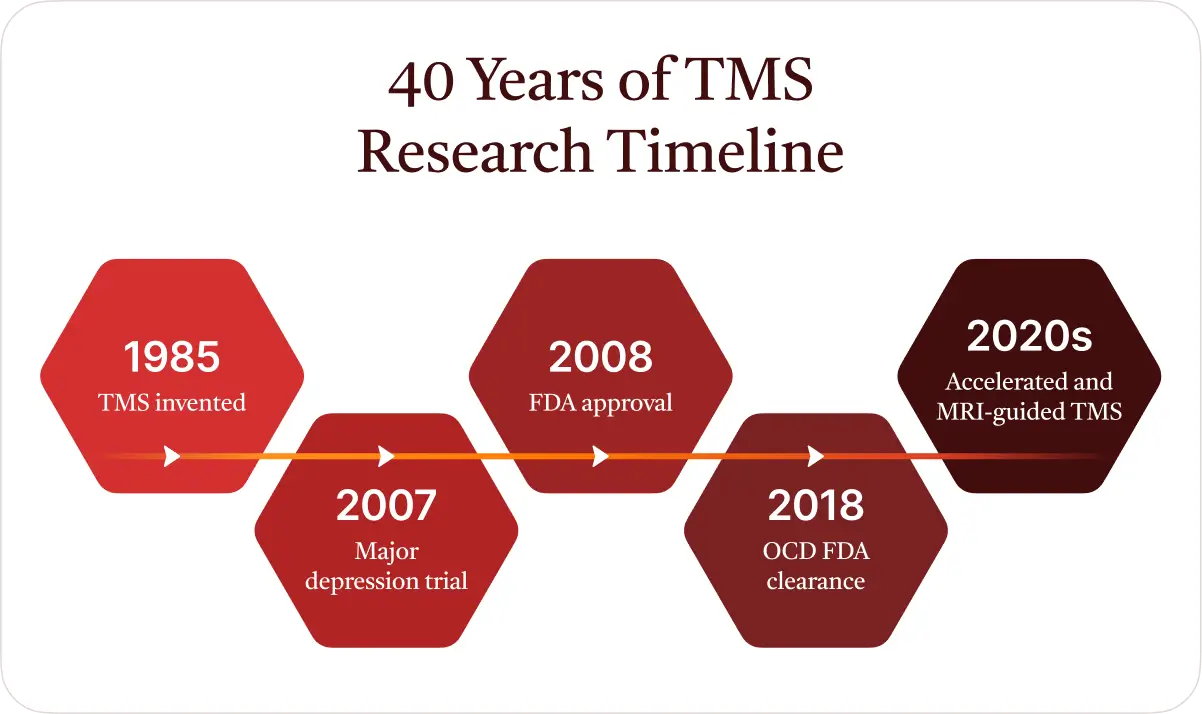
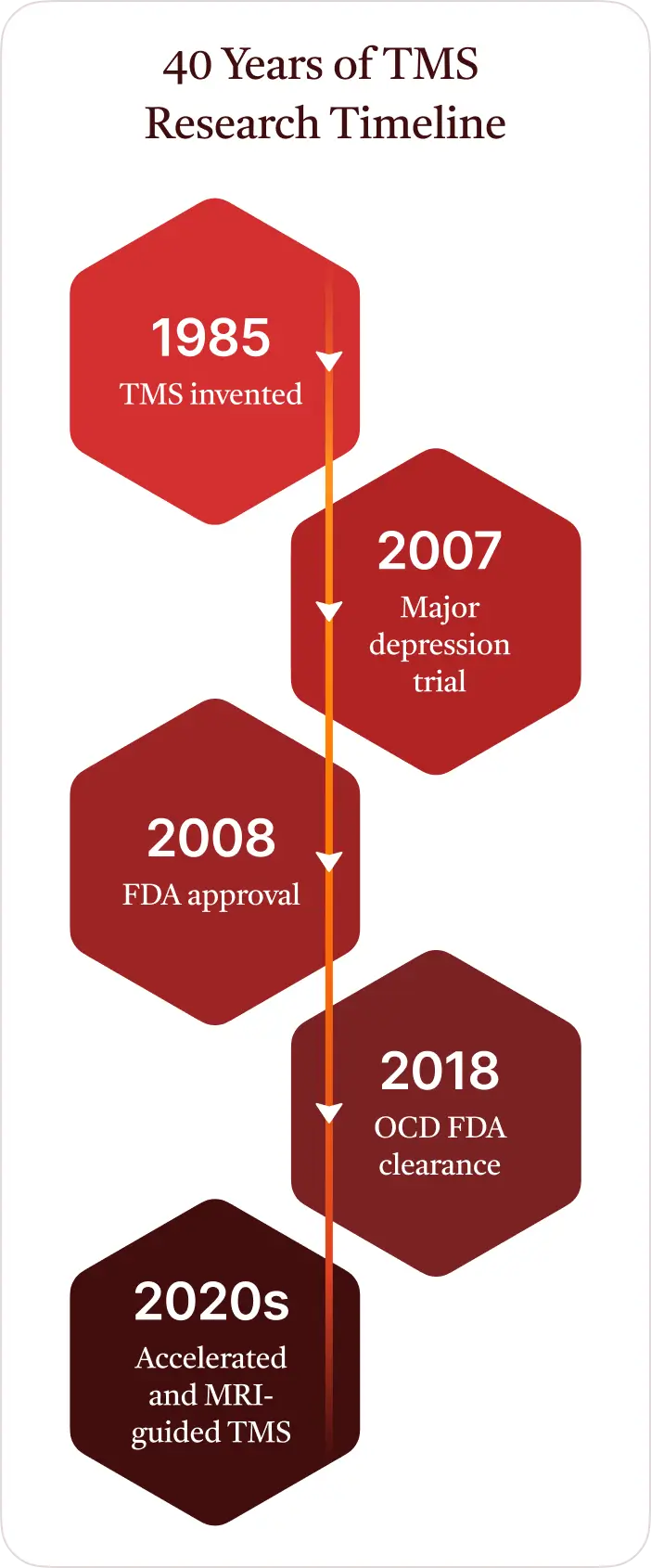
Research on TMS has been ongoing for more than 40 years. Scientists and clinicians have conducted thousands of studies evaluating how TMS works and which patients benefit most. Over time, this research has expanded beyond depression while also testing different stimulation targets, treatment schedules, and newer protocols such as accelerated and MRI-guided TMS.
The list below highlights the 10 most cited studies that helped establish TMS as a legitimate medical treatment and continue to shape how it is used today.
Yes. TMS is a well-studied medical treatment that has been cleared by the FDA for several conditions, including:
TMS is also commonly used off-label for other mental health conditions when standard treatments have not worked because research shows potential benefit and the treatment is considered safe. Research and clinical practice suggest it may help with:
There are now thousands of research studies and hundreds of clinical trials evaluating TMS.
Not all treatment centers offer TMS. When looking for a provider, consider providers that offer:
If you’re in or near Indiana, Indiana Center for Recovery is often considered the best option in the Midwest for serious mental health issues. ICFR offers TMS therapy along with other advanced mental health treatment options to find the approach that works best for your specific symptoms, including:
Patients also have access to more dedicated evidence-based talk therapies and holistic therapies such as acupuncture, reiki and equine therapy.
Having multiple treatment options in one place means you don’t have to put all your hope into just one option like TMS. Even if TMS doesn’t work for you, there are plenty of other breakthrough treatment options that can.
Call today to learn more without commitment and 100% confidential.
You’re reading this for a reason. Even if you don’t know if you’re “ready”, now is the best time to reach out.
 100% Confidential
No judgement
No commitment
 Call (844) 650-0064
  Verify Your Insurance

Error: Contact form not found.
 Get Answers Now
You don’t have to figure this out alone. We can guide you through your options—completely confidential and with zero commitment.
100% Private